Field Notes: Hanna Farms
Continuity and change
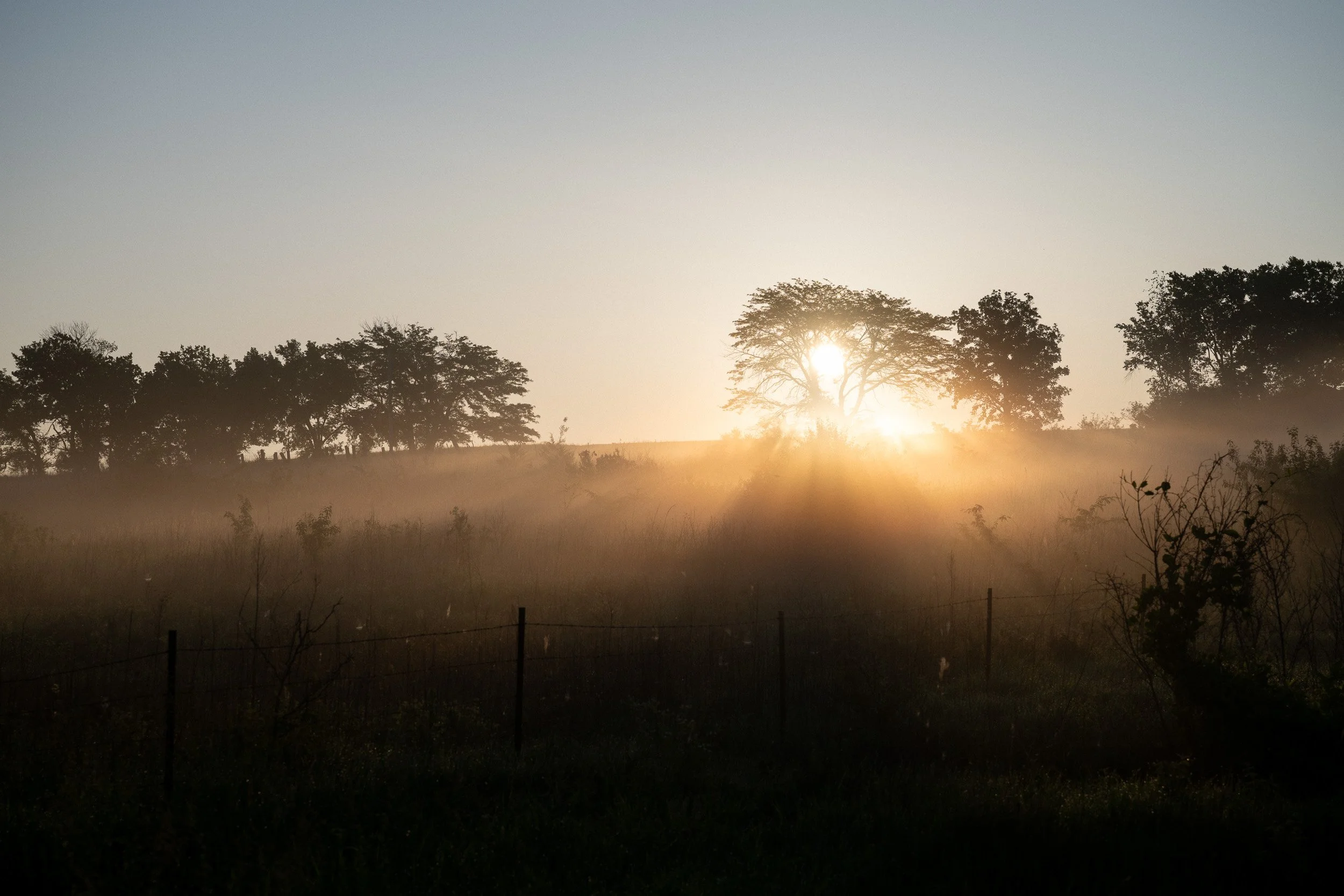
My grandfather farmed this ground well into his eighties. This was my favorite place in the entire world as a child. One of the few places I have ever really felt like home. When I was younger, I remember helping work cattle with him, vaccinating livestock and tagging calves. I also remember the hot days spent throwing square alfalfa bales in the oppressive summer heat, stacking them in the barn where it would get so hot I would sweat completely through my clothes to the point where it looked like I had jumped into a pool with all my clothes on. We would spread salt over each layer of bales to help dry out the alfalfa. Historically, barns would burn down from the moisture and heat before people realized what was happening. More than anything, though, I remember that my grandfather was always fixing or improving something. One of my clearest memories is helping reset the massive sliding doors on one of the outbuildings. My grandfather had put me in the bucket of his loader and raised me up to where I could reach the upper track. OSHA and child labor laws be damned.
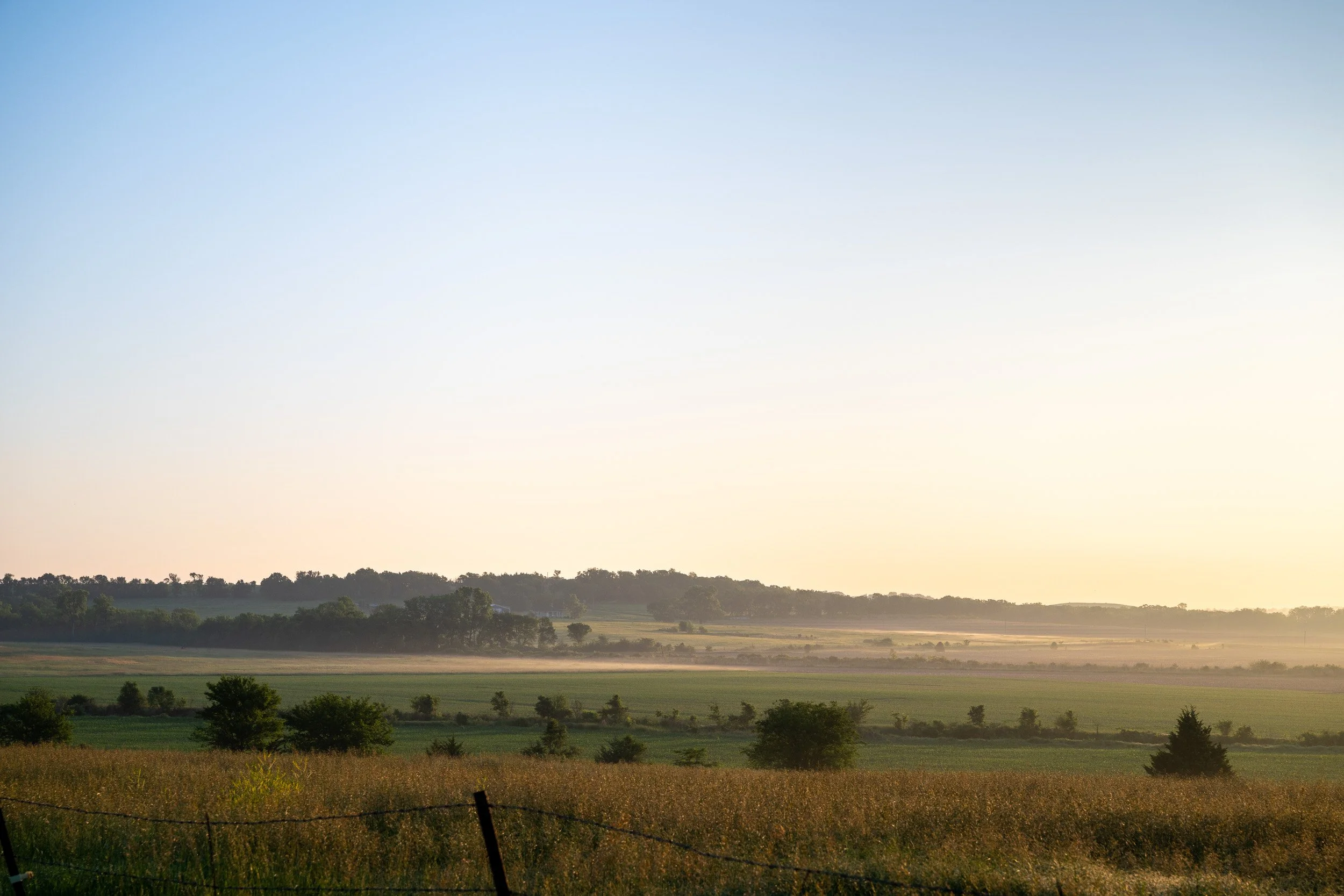
I left Kansas City before sunrise and headed west toward Silver Lake, Kansas. It didn't take long for the city to give way to the rolling hills of northeast Kansas. Spring had settled in by then, and the morning carried the familiar sounds of the countryside: birds somewhere out beyond the buildings, wind moving through open space, gravel under tires.
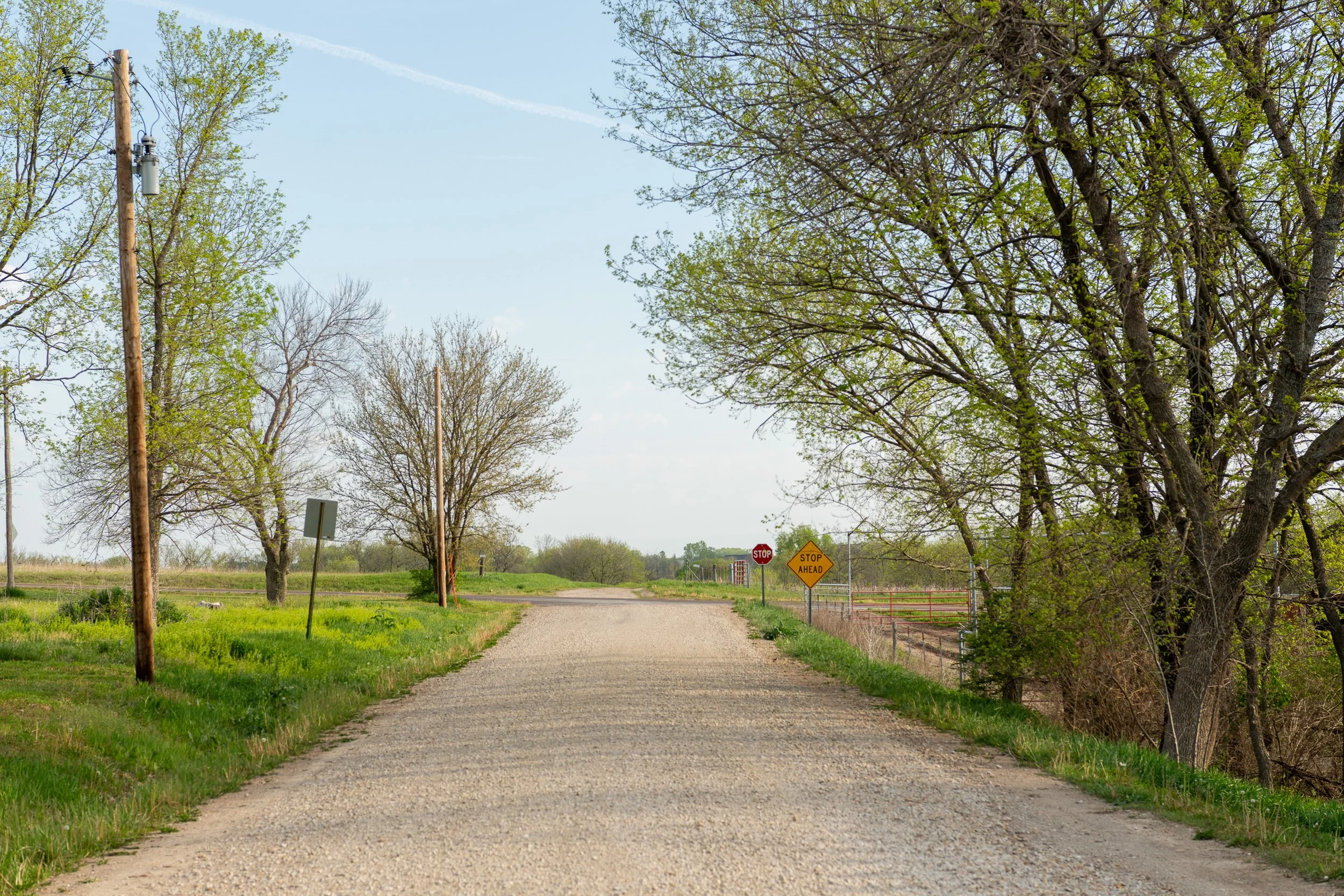
I pulled in around 6:30 a.m. Full disclosure, I was looking to broaden my portfolio to include agricultural themes. Family ties provided easy access. What I didn't account for was what it would feel like to actually be back. Before there was much time to stand around or catch up, my cousin looked at me and said, "You ready to get going?" We hopped in the truck and headed to town.
I came with a backpack, a couple of lenses, extra batteries, and extra cards. Beyond that, no shot list, no plan. My general approach is to work wide, medium, and tight, and that was about the extent of my preparation. I had no idea what the day was going to look like.
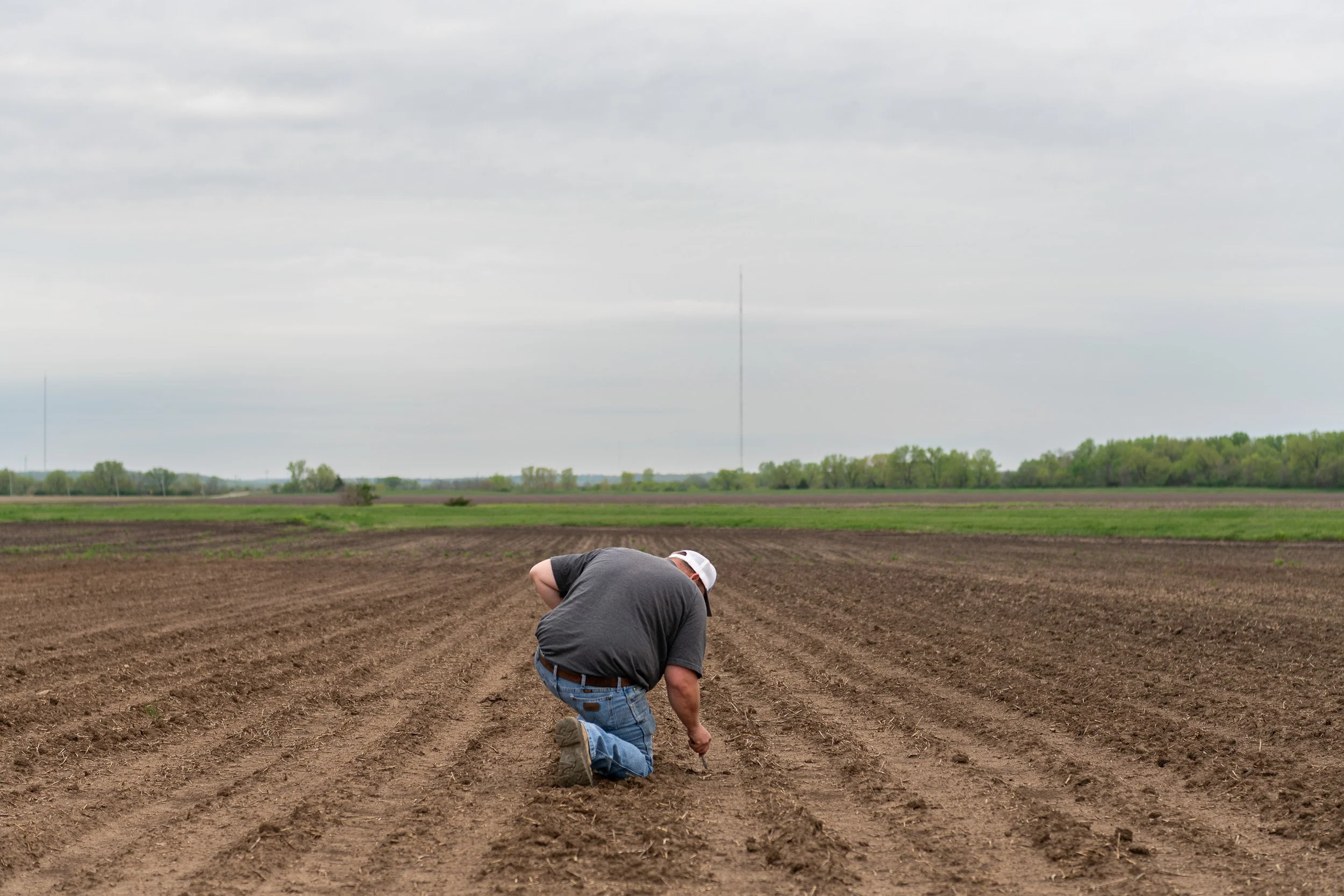
I think most people imagine farming as a series of cinematic moments. Tractors crossing fields at sunset. Dust hanging in golden light. Wide-open landscapes. There are moments like that, sure, but what struck me most about the day was how much of it is logistics, preparation, maintenance, and decision-making long before anything ever touches a field.
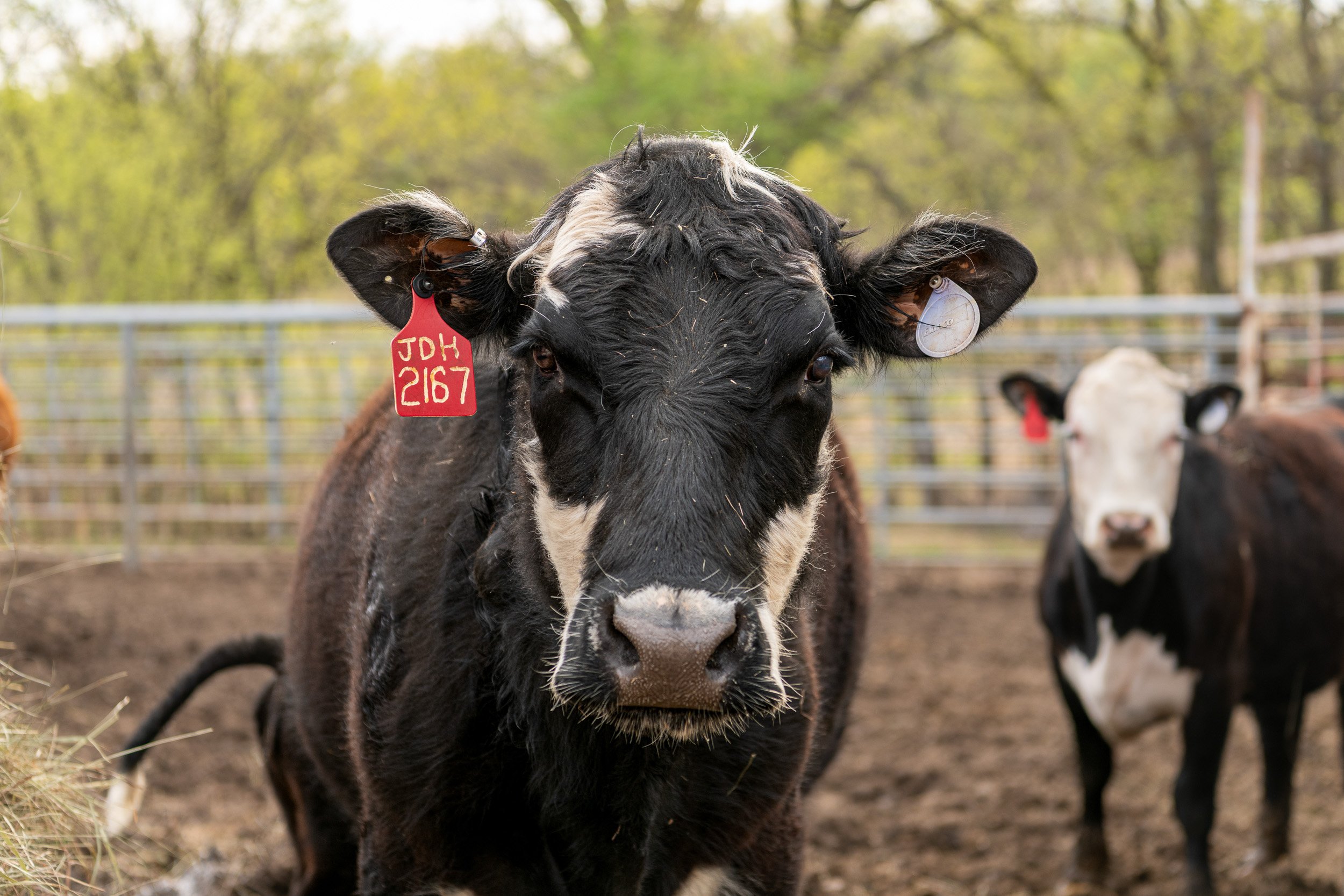
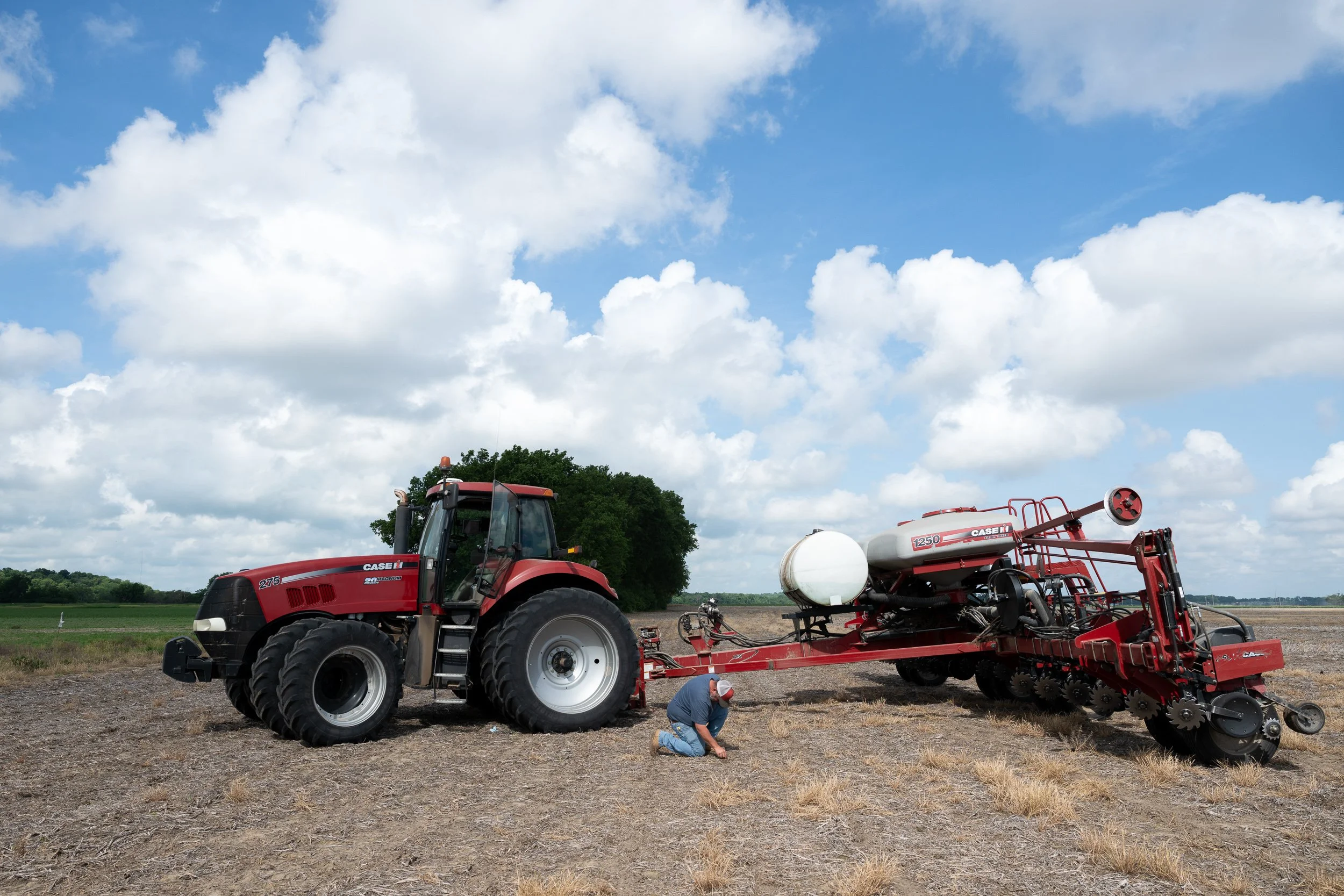
The first thing we did that morning was drive into town to pick up chemicals for crops. We loaded a trailer, hauled everything back to the farm, unloaded it into storage, organized supplies, made another run to a farm store, mixed chemicals, loaded a sprayer, and prepared equipment for the work ahead. The pace of the day never felt frantic, but it also never stopped moving. Every task fed directly into the next one.
A farm was not an environment designed for photography. It was an active working system with its own momentum and priorities that existed long before I showed up with a camera. Nothing paused. Nothing was staged. The work continued whether I was ready or not, which meant my role became less about making images and more about learning how to move through an environment already in motion. I was responding rather than constructing.
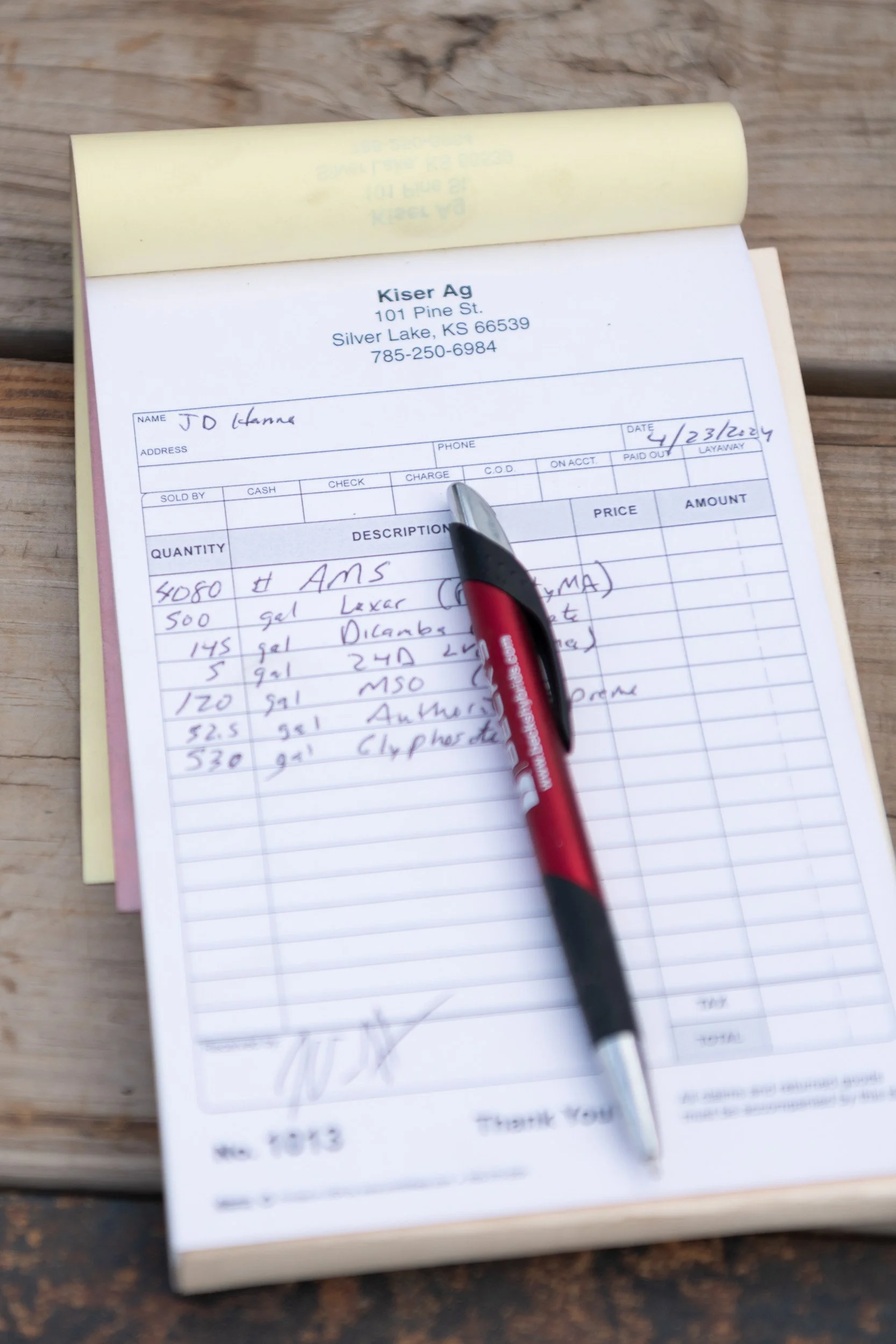
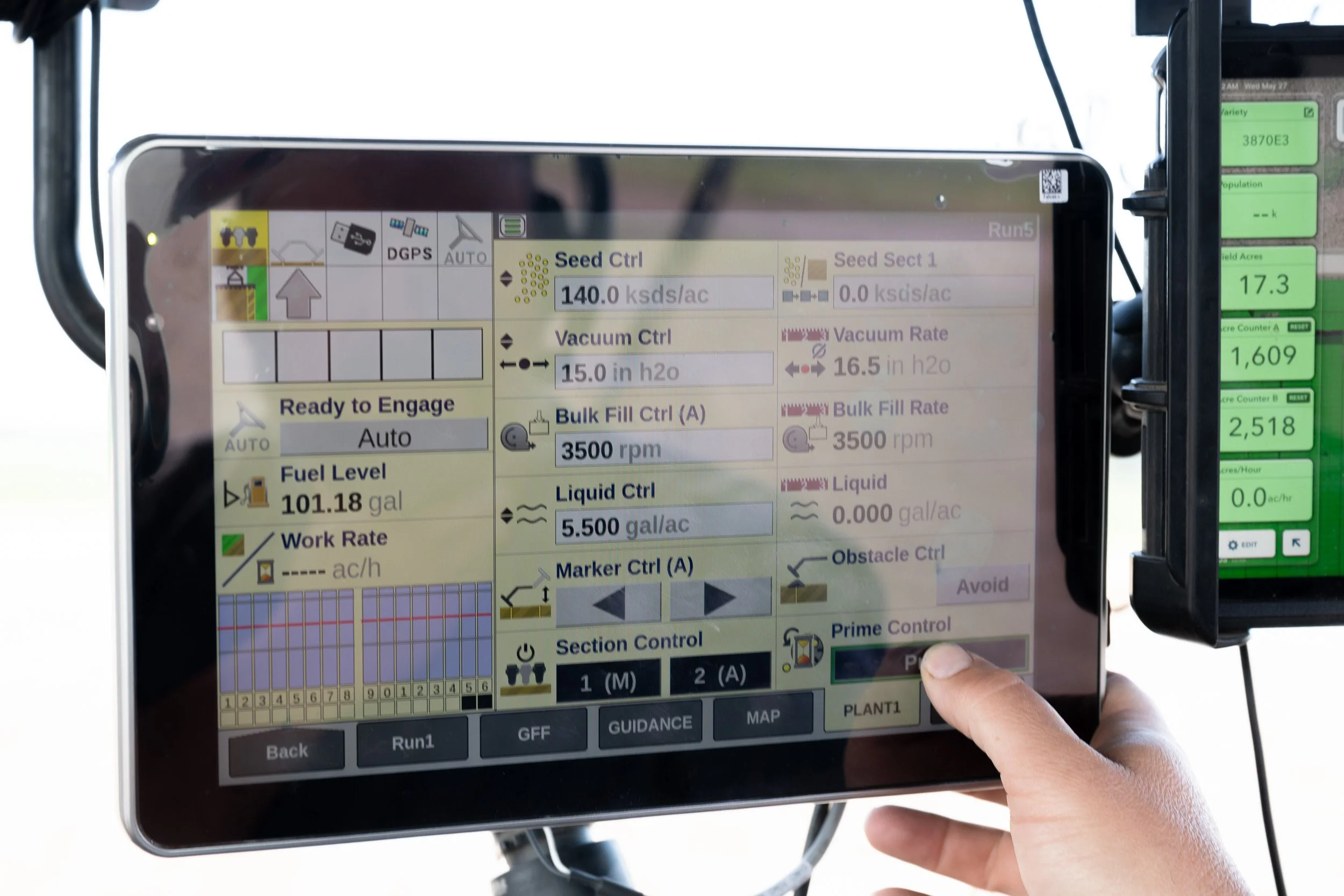
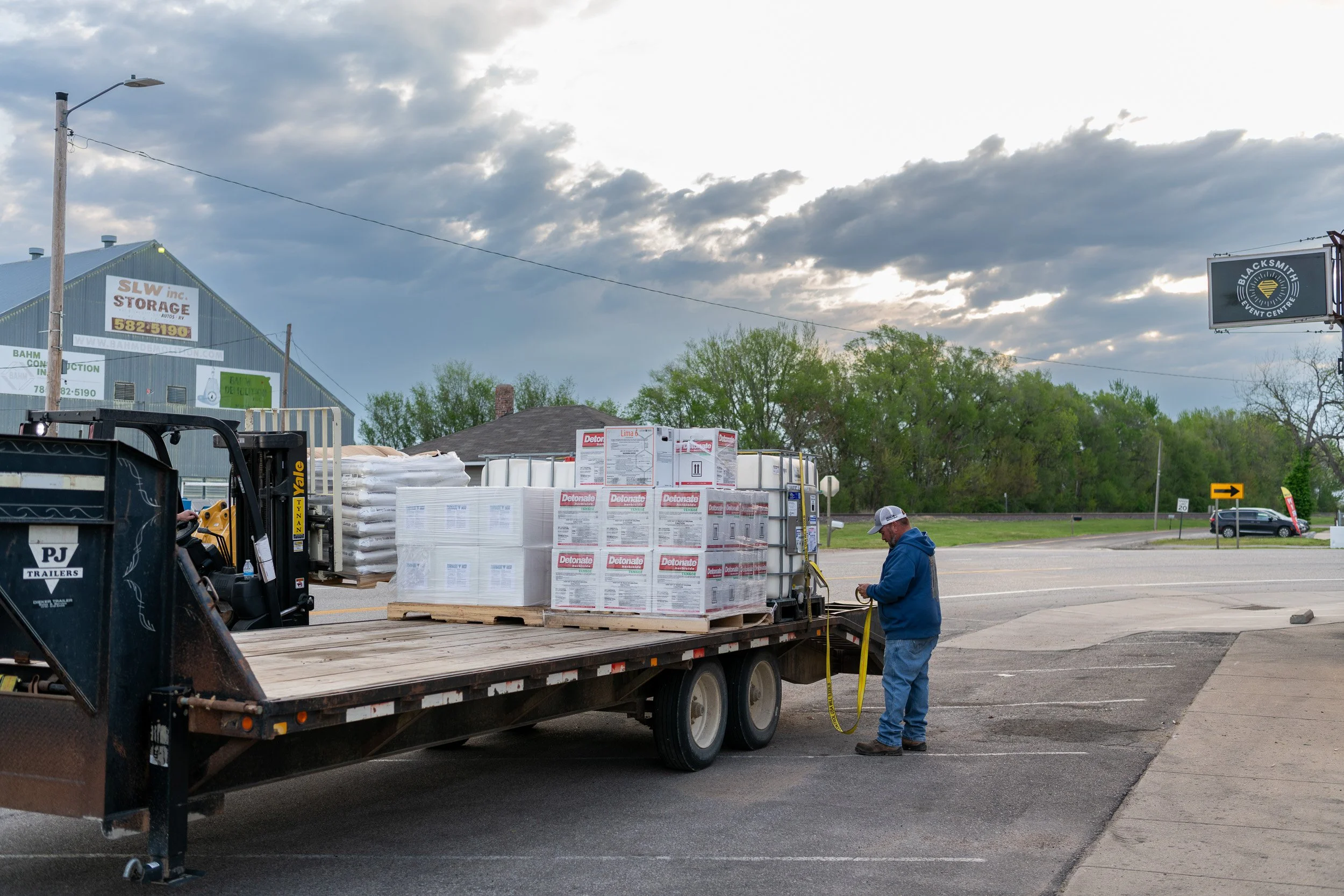
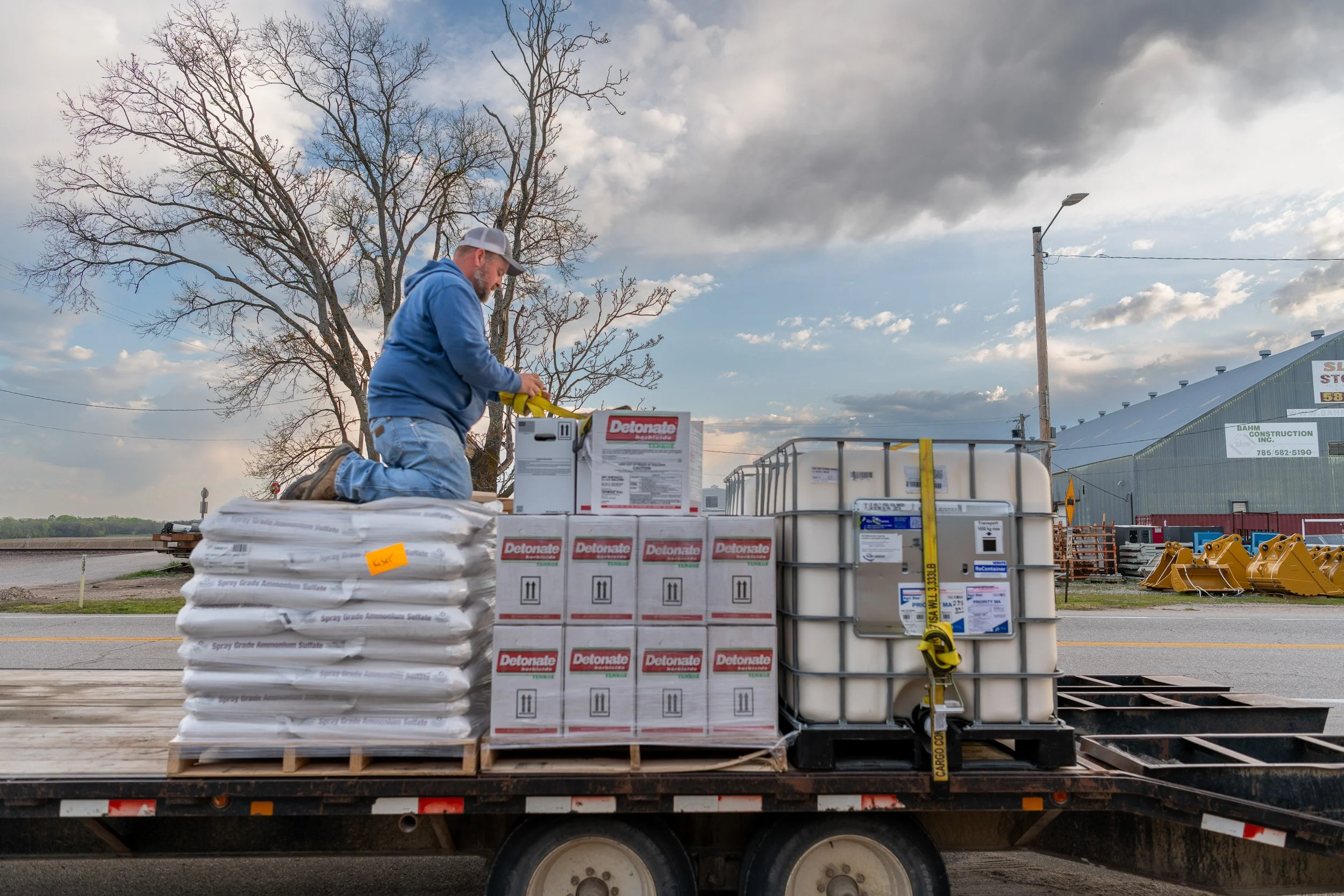
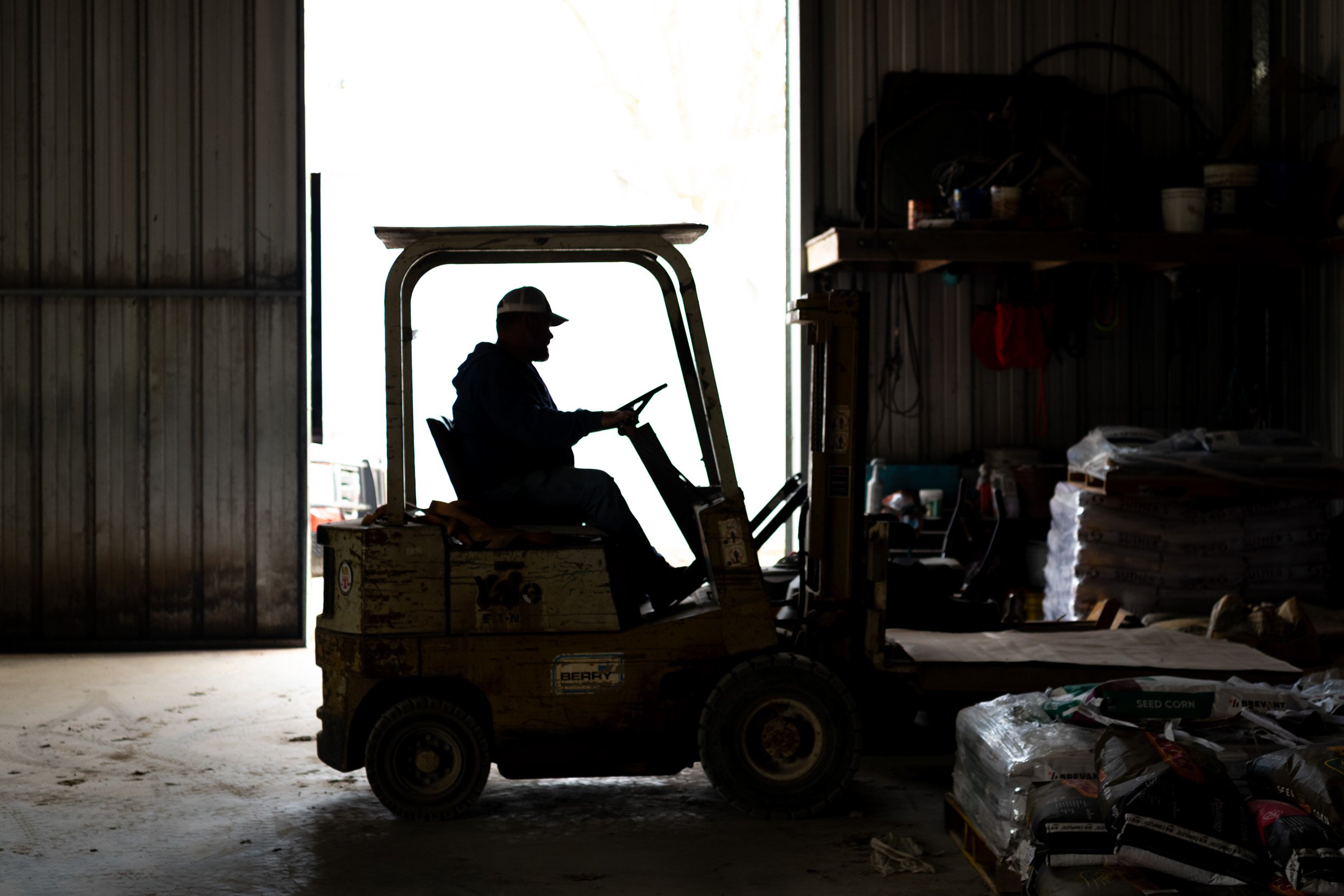
Moving through the farm capturing images required a different kind of attention than most environments I shoot in. Tractors, loaders, forklifts, power take-off equipment, all of it moving as part of routine daily operations. I grew up around this and knew the environment, but a viewfinder changes your relationship to space. When you are looking through a lens your awareness narrows. You have to consciously be aware of all that is happening around you that's not within your focal length. I was comfortable there, but I was paying attention in a way that felt different than shooting somewhere without those variables.
When my grandfather stepped away from the farm and moved to town it was difficult. His identity and his life were so deeply rooted in this place that seeing him step away was hard to process. Watching my grandparents get old and not be able to do the things they loved doing was so hard. My cousin, JD, who had worked under my grandfather for years and even lived with our grandparents at times during his childhood, would be the one to carry it forward. At the time, the transition felt uncertain to me. I wasn't sure what it would mean for the place I loved so much. More than anything I hated what my grandparents moving off the farm symbolized; the end was getting closer.
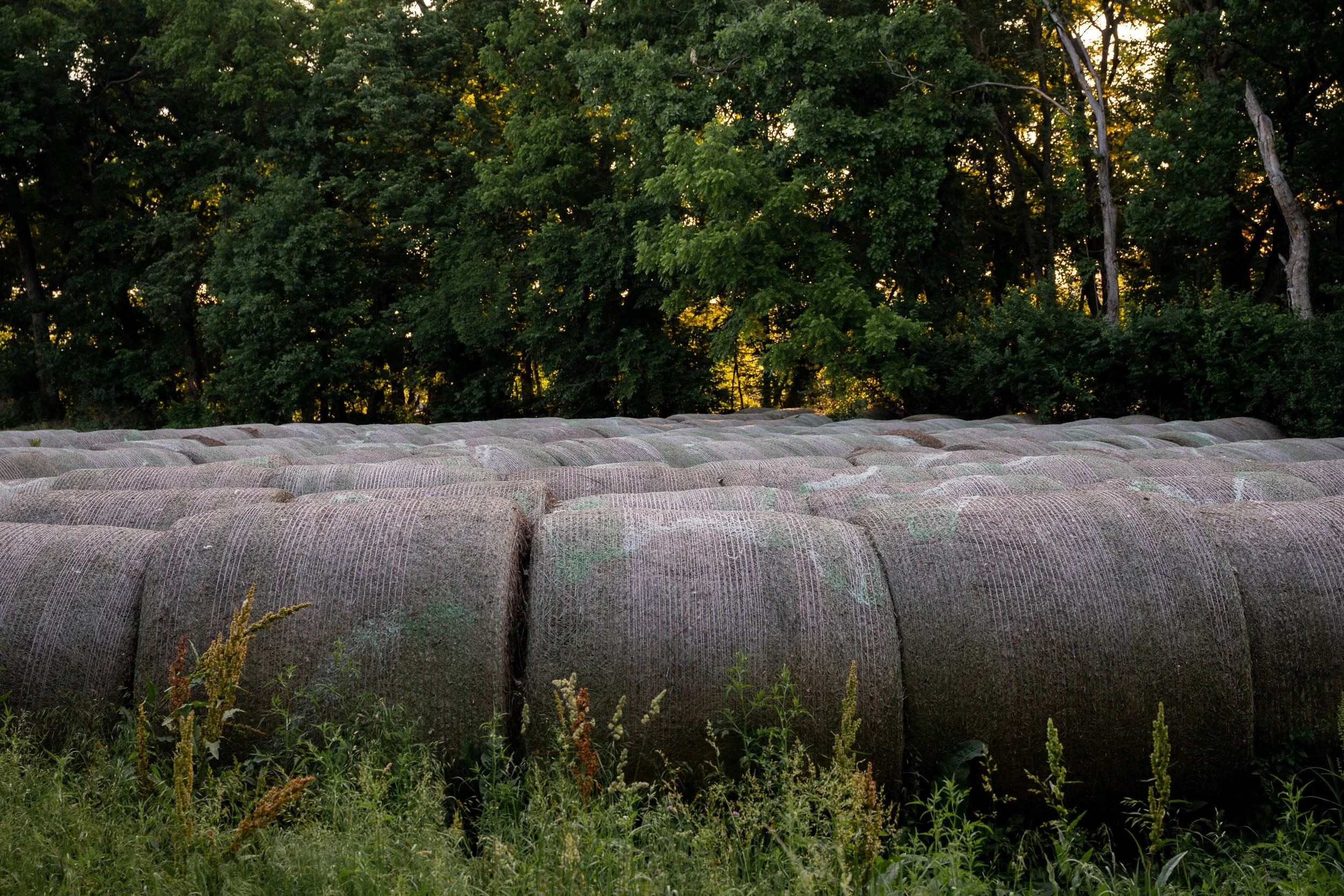
Some of my favorite memories of this place have nothing to do with work at all.
Down the road from the farmhouse there was always a cluster of large round hay bales grouped on the roadside, dozens and dozens of them, and anytime we had a family gathering all the cousins were out there together. We would spend hours climbing to the top and running epic games of tag across them, occasionally falling down into the gaps between. There were occasional injuries and hurt feelings, but it never stopped us from playing again. I loved being here as a kid.
Returning with a camera changed my relationship to the place. As a kid, the farm mostly existed as an adventure: noise, movement, animals, and the free-range freedom that came with wandering through it. Thinking back on it I have no idea why the adults let us wander around unsupervised. Photographing it years later forced me to slow down and pay closer attention to the systems holding everything together: the repetition of tasks, the coordination between people and machinery, and the constant awareness required to keep everything moving safely.
These days the farm doesn't look exactly the way I remember it, and honestly it shouldn't. My cousin has made the operation his own. Buildings have changed. Equipment has changed. Systems have changed. The farm has been adapted to fit the realities of modern agriculture and the way he works. That is not a betrayal of what existed before. It is probably the only reason the place continues at all.
I found myself pondering how agriculture is usually represented visually. It's easy to lean too far in either direction, turning farming into sentimental nostalgia or flattening it into a story about hardship and decline. Neither felt fully honest. What intrigued me more was the complexity of the place itself and the way modern systems, family history, labor, maintenance, and uncertainty all existed side by side.
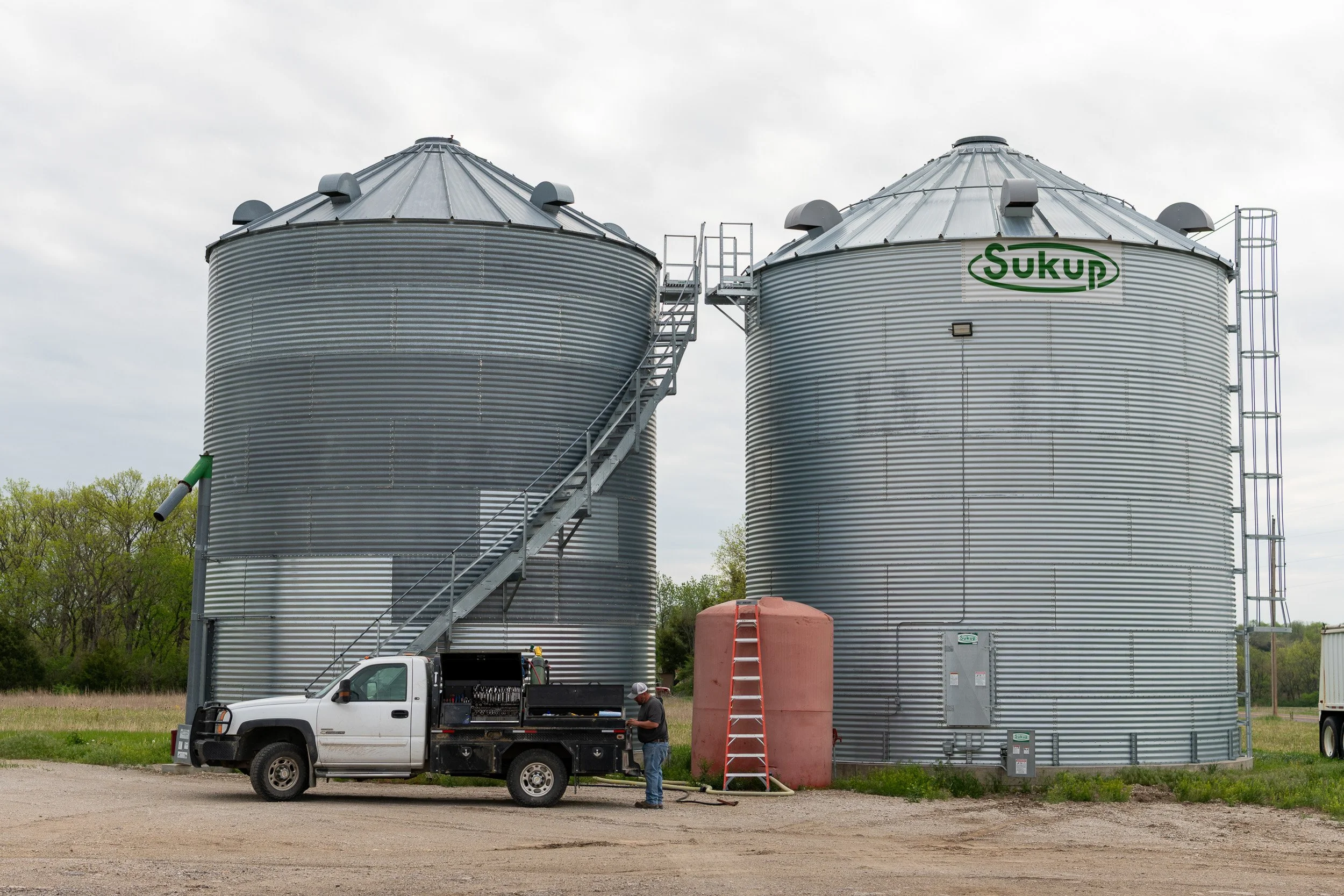
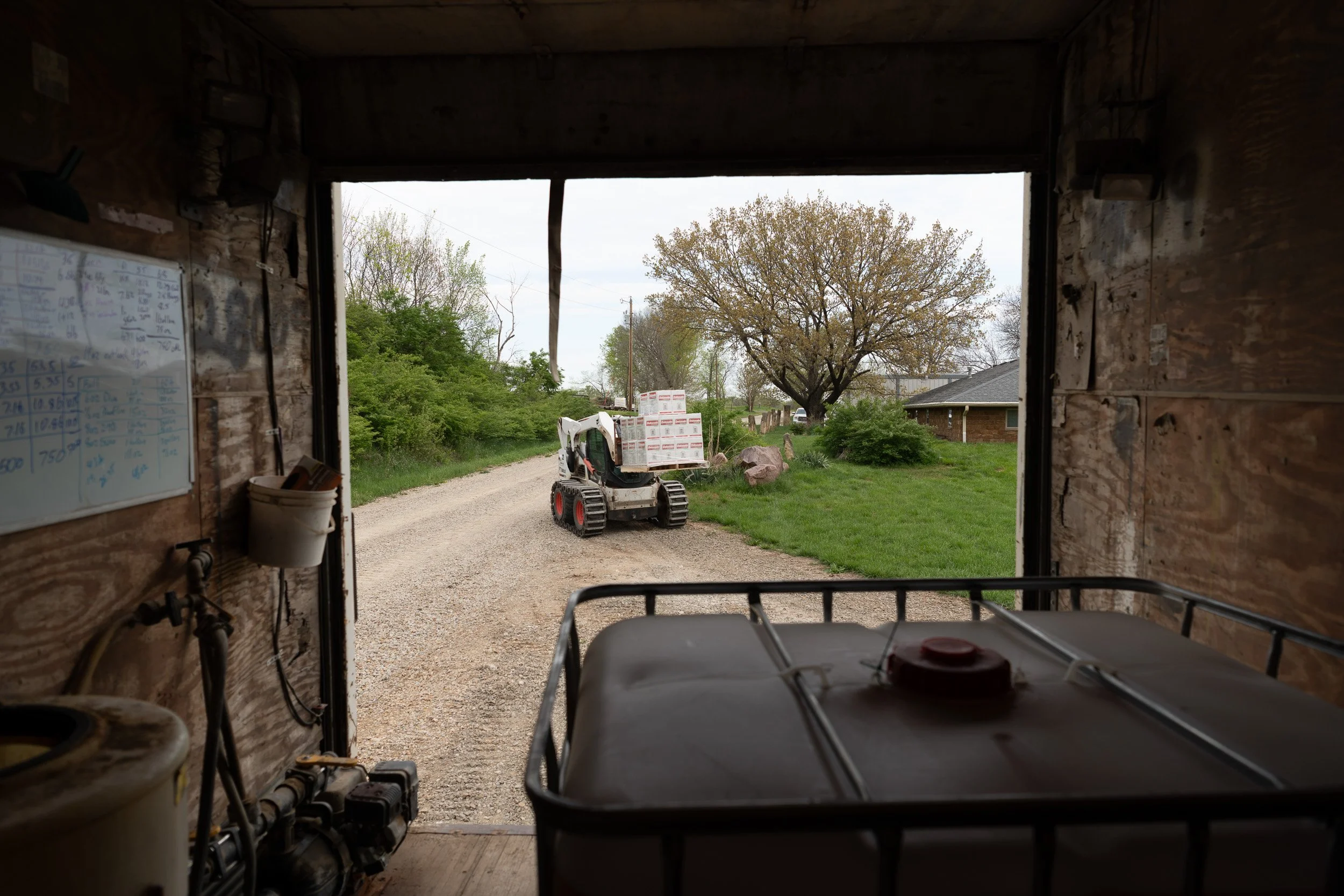
That was one of the things I kept thinking about throughout the day. My grandfather's version of farming and my cousin's share the same land, but they are not the same job anymore. At the time, my cousin was serving as president of the Kansas Corn Growers Association, which meant parts of his work extended far beyond the farm itself. Throughout the day, between loading trailers and preparing equipment, we talked about trips to Washington, D.C., meetings with elected officials, and the responsibility of representing Kansas farmers at a broader level. JD mentioned he liked to put the representatives from the Kansas City area through their paces when it came to agriculture. It was a reminder that modern agriculture is tied as much to policy, economics, and infrastructure as it is to the physical labor most people associate with it.
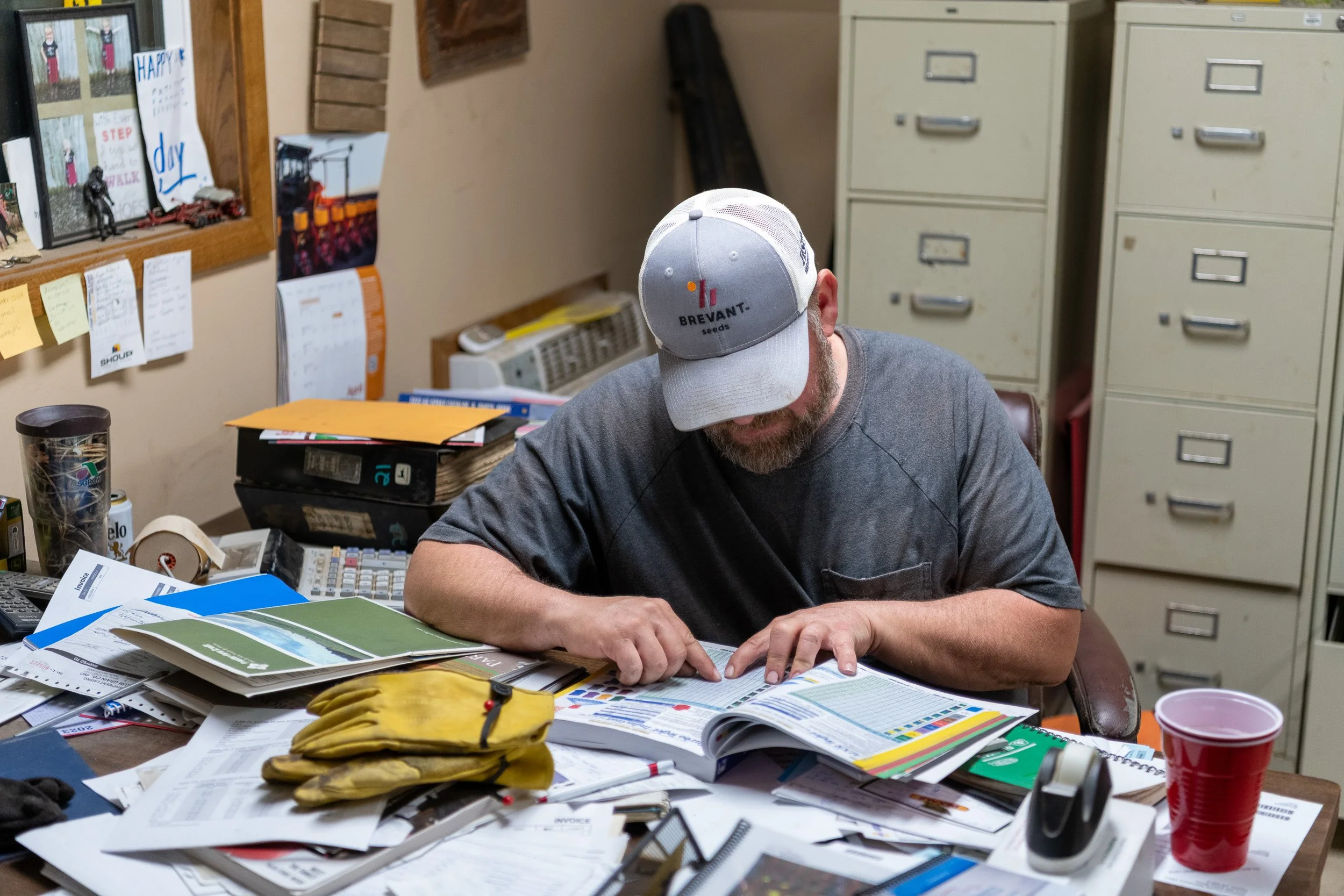
I think that was the biggest shift for me. It wasn't realizing farming is hard work, I already knew that. Growing up around it, that part was never a question. What changed was realizing how much of the job now exists beyond the boundaries of the farm itself. The work still happens in the fields, but it also happens in meetings, regulations, markets, transportation systems, and decisions most people never see. At the same time, some things still felt unchanged. The constant movement from one task to another, the need to repair, organize, prepare, and anticipate problems before they happen, the awareness that there is always another thing waiting to be done. Even with new equipment and a different generation running the operation, that underlying rhythm still felt familiar.
By the end of the day, what stayed with me most was not nostalgia but an appreciation for continuity. The farm had never remained frozen in time. There was no way it could. My cousin took what our grandfather built and made it his own. When I was younger, I don't think I fully appreciated what that required. Now, I have a much deeper respect for both him and the scale of responsibility he carries.