Field Notes: Habitat Flats
Patience and precision
Growing up in rural Kansas, spending time outside was part of life. Both of my grandparents farmed, so weekends and summers were often spent on the land, and by the time I reached high school, social gatherings rarely happened in town. They happened in places with names like Back Pasture, T Road, and Railroad Bridge. We drove gravel roads, watched sunsets from the backs of pickups, and found just about any excuse to stay outside a little longer.
I've never been much of a hunter, but those years gave me an appreciation for rural places that has stayed with me. I enjoy the pace of them, the people they attract, and the environments they create. Last fall, my wife and I returned from South Africa, where I spent several days photographing wildlife on safari. As memorable as that experience was, it also reminded me how much I enjoy working outside with a camera. I came home wanting more of it. I didn't have another safari on the calendar, but I found myself looking for another opportunity to spend time in an unfamiliar environment, photograph animals, and satisfy the curiosity that had followed me home.
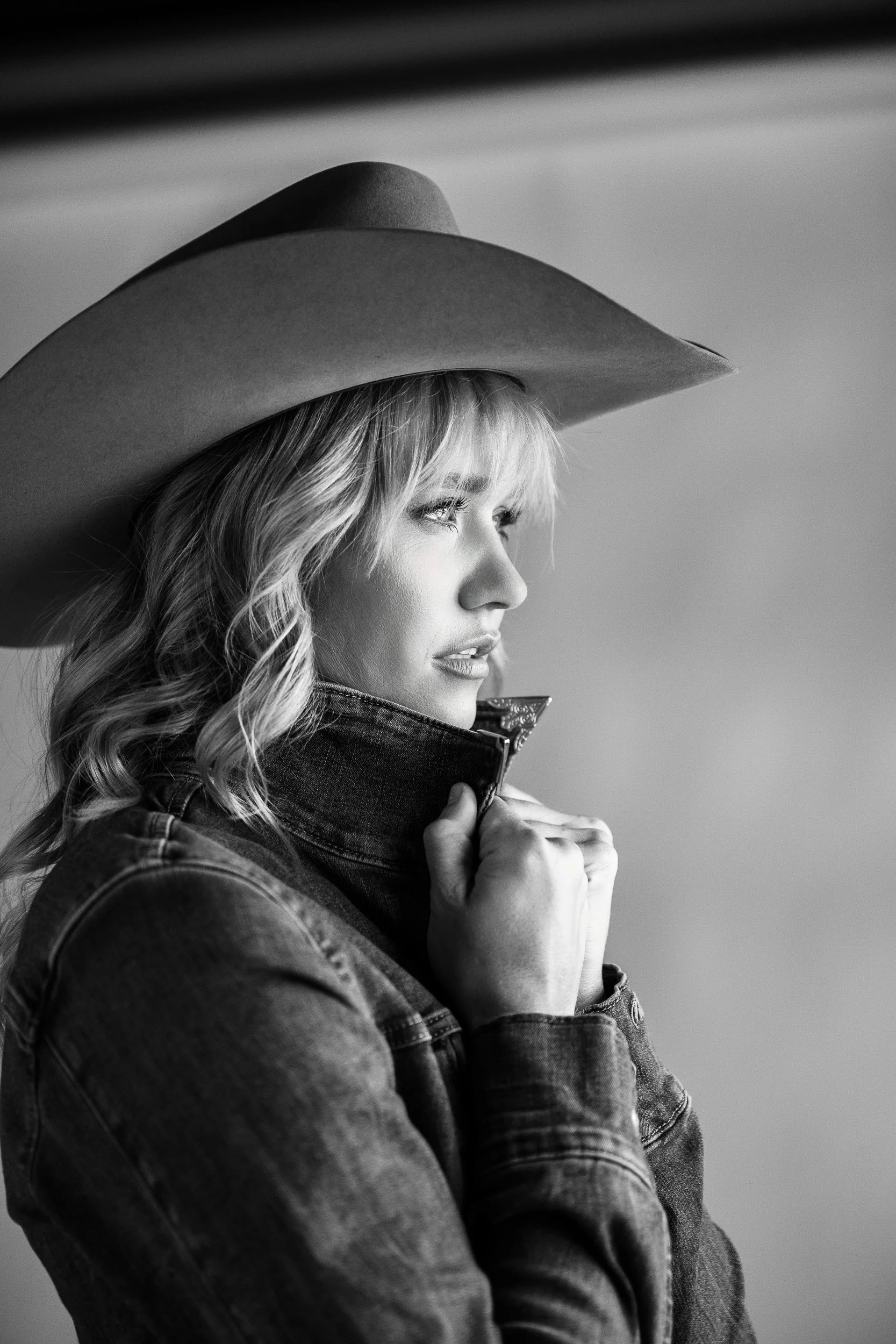
I'd met Tara several years earlier through photography, and after reconnecting we spent much of the following year working together on her modeling portfolio. During one of our conversations, we had the idea to trade the studio for something completely different. Instead of another portrait session, I would spend a day following her through a normal workday at Habitat Flats, where she works as the lead dog trainer.
I didn't have a shot list or a creative brief. My plan was to spend the day paying attention, asking questions, and trying to understand a world I knew very little about.
I left home around four o'clock that morning. Habitat Flats sits outside Marceline, Missouri, a couple of hours from Kansas City, and the trainers begin their day at sunrise. It was one of those fall mornings that starts with a bite in the air, and I was glad I'd dressed in layers for the drive north. By the time the sun climbed above the trees, it had turned into one of those nearly perfect autumn days. The sky was clear, the air was crisp, and it was exactly the kind of morning that makes you want to spend the entire day outside.
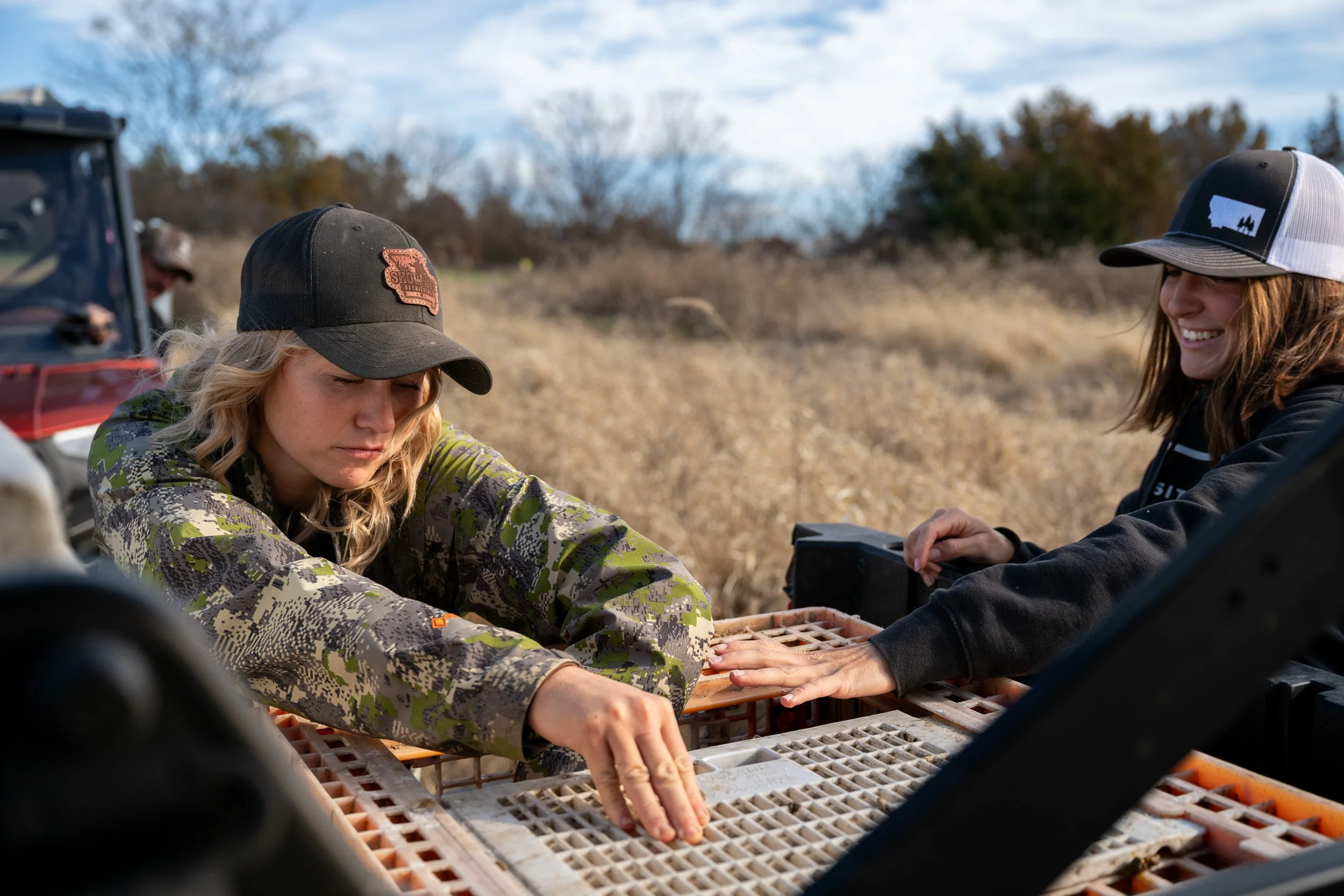
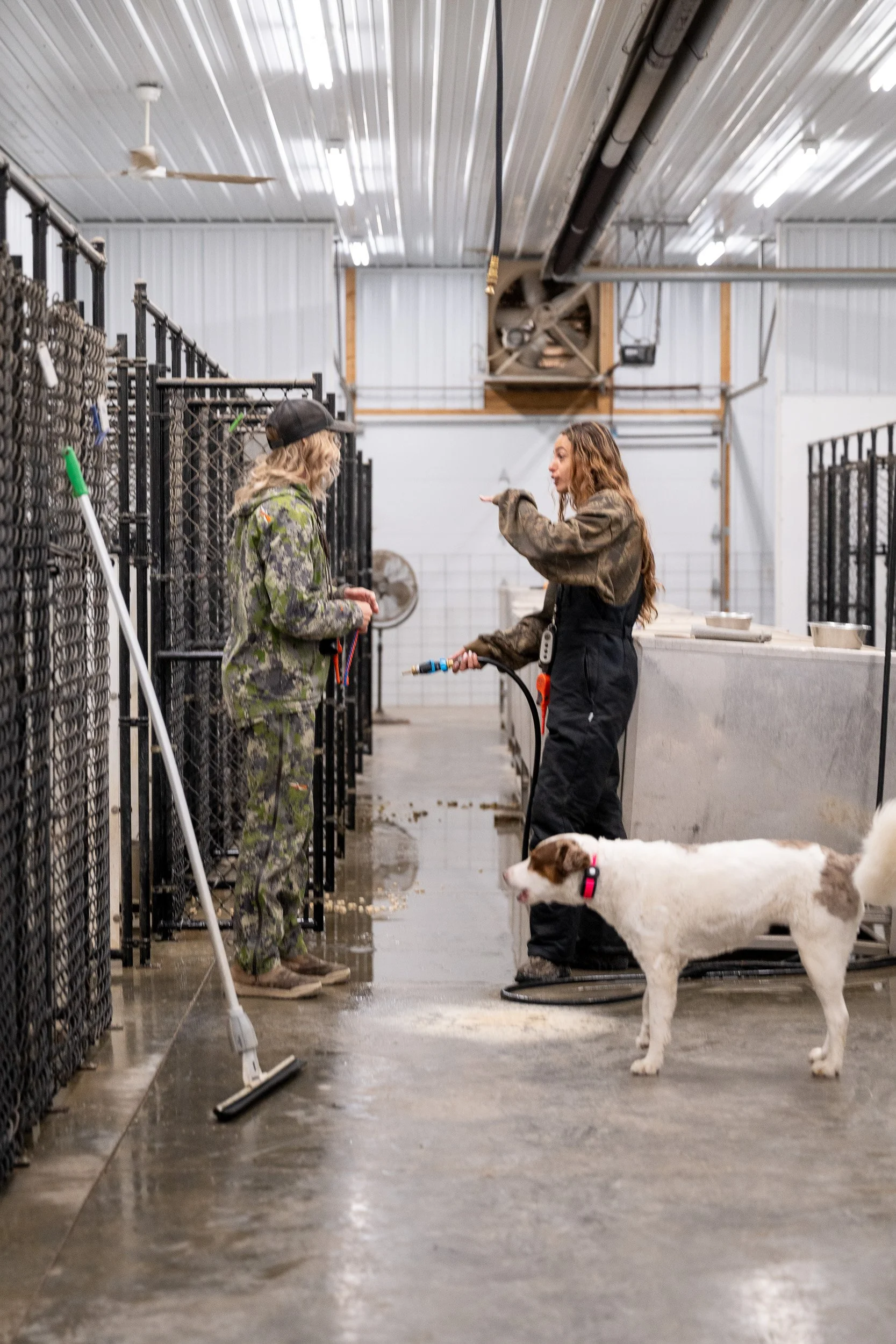
Tara met me outside and walked me toward the kennels, where she'd already started her morning routine. The moment we stepped inside, I was met with a cacophony of barking. It echoed off the concrete floors and cinderblock walls until conversation became almost impossible. Tara was wearing hearing protection, something I hadn't expected but immediately understood. I'll admit, I was a little overwhelmed. There were dogs in every direction, trainers moving from kennel to kennel, food being prepared, kennels being cleaned, and more activity than I would have guessed could happen before sunrise.
It wasn't the part of Habitat Flats that most people ever see, but I'm glad that's where the day began. Before the first retriever entered a training field, there were dozens of small responsibilities already underway. Every kennel had to be cleaned. Every dog had to be fed. Every trainer had a routine before the first drill of the morning ever started. Spending time in the kennels gave me a much better understanding of everything that followed.
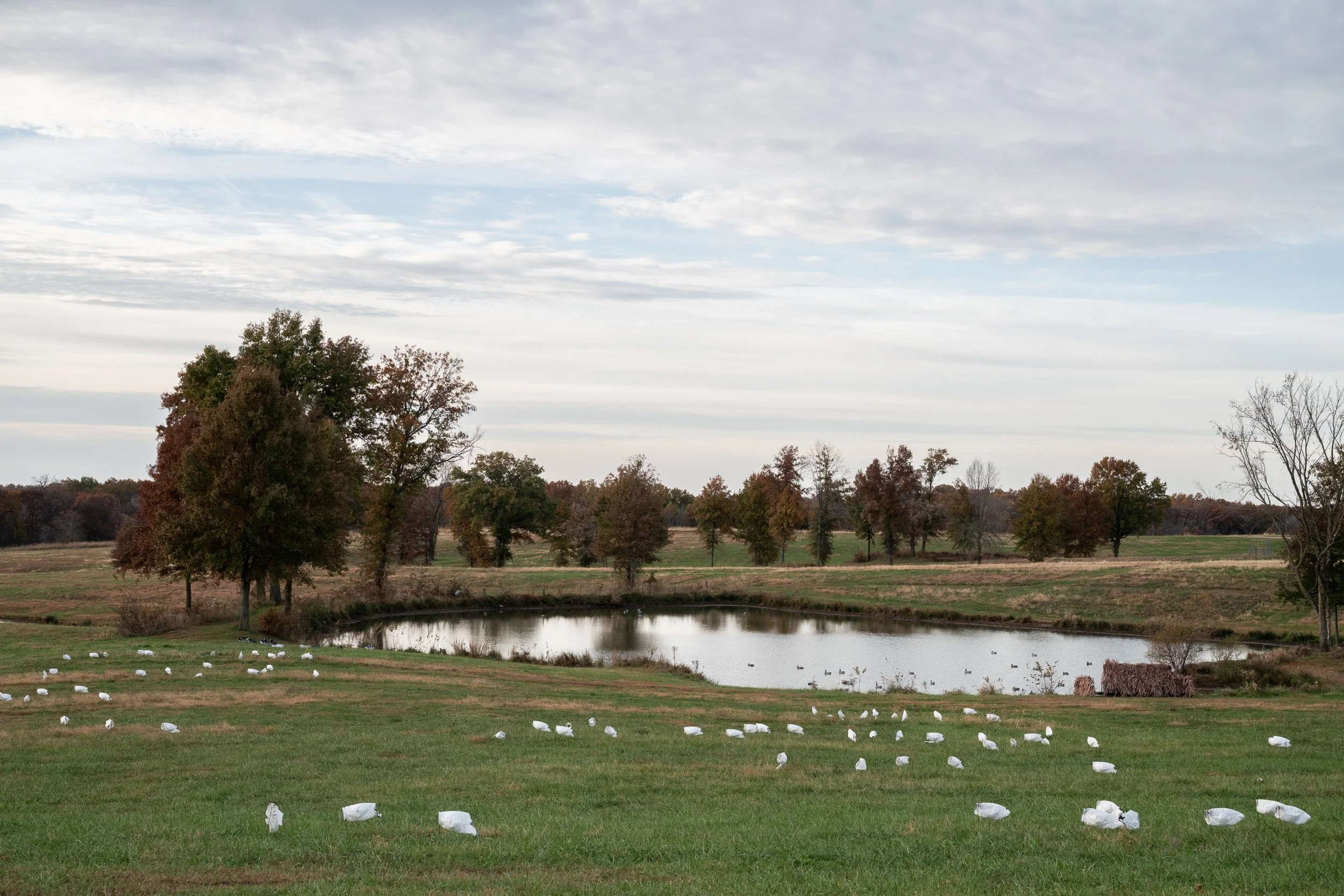
While Tara worked through those chores, I wandered the property with my camera. I wasn't in a hurry to start photographing dogs because I didn't know enough yet to understand what I was looking at. Instead, I walked, looked around, and eventually sent the drone into the air. From the ground, Habitat Flats felt expansive. Seeing it from above gave me a different perspective. I could see how the ponds related to one another, how the roads connected different training areas, and how the terrain itself had been incorporated into the property. It was obvious that a great deal of thought had gone into how everything fit together, even if I didn't yet understand exactly how each part was used.
By the time Tara finished the morning chores, I had a much better sense of the property than I did when I arrived. I still didn't know much about training retrievers, but I knew enough to realize there was far more happening than someone could understand from the sidelines. As we headed toward the first training field, I put the drone away, picked up my camera, and started paying attention.
When the training began, I realized pretty quickly that I wasn't going to understand much by standing fifty yards away with a long lens. If I wanted to make photographs that felt honest, I needed to understand what the trainers were asking the dogs to do. That meant watching a drill from beginning to end, asking questions when there was time, and resisting the urge to immediately start chasing photographs.
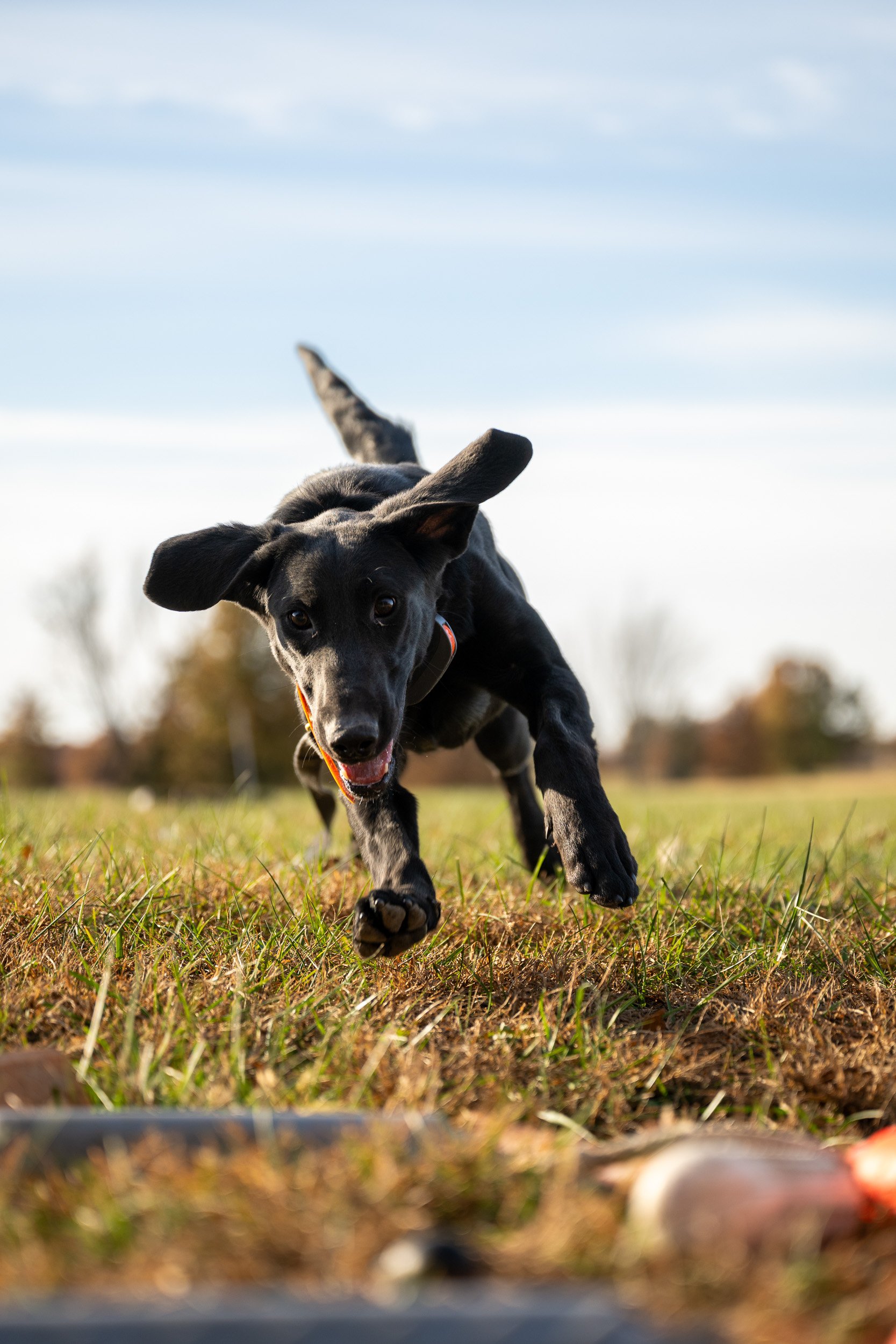
The morning started with younger dogs. Their sessions felt playful, but even then there was structure behind what I was watching. Every repetition had a purpose, and every success seemed to build toward something else. As the day went on, we worked with older dogs that demanded a different level of precision. The expectations changed, the pace changed, and the conversations between trainer and dog became more subtle than I expected.
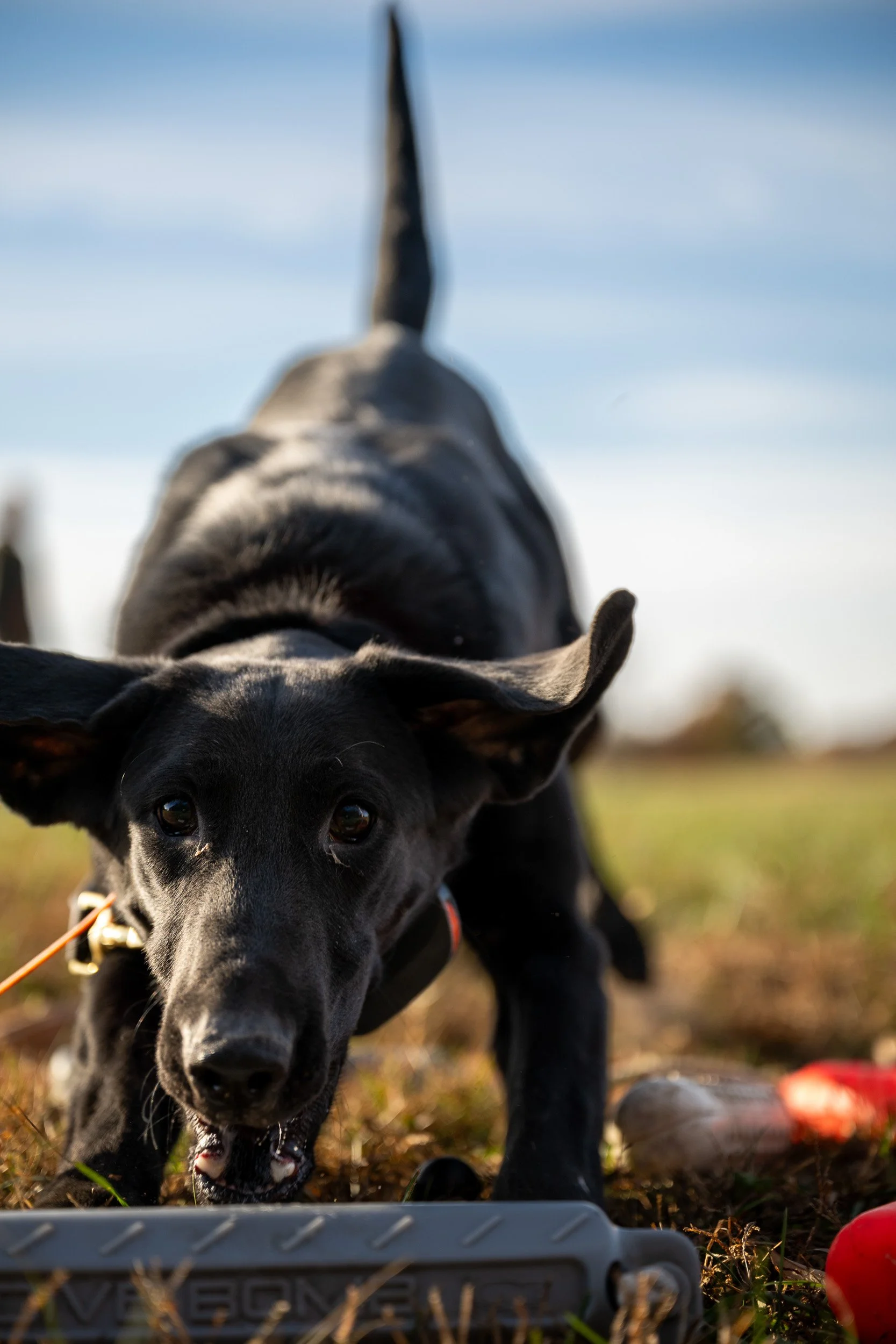
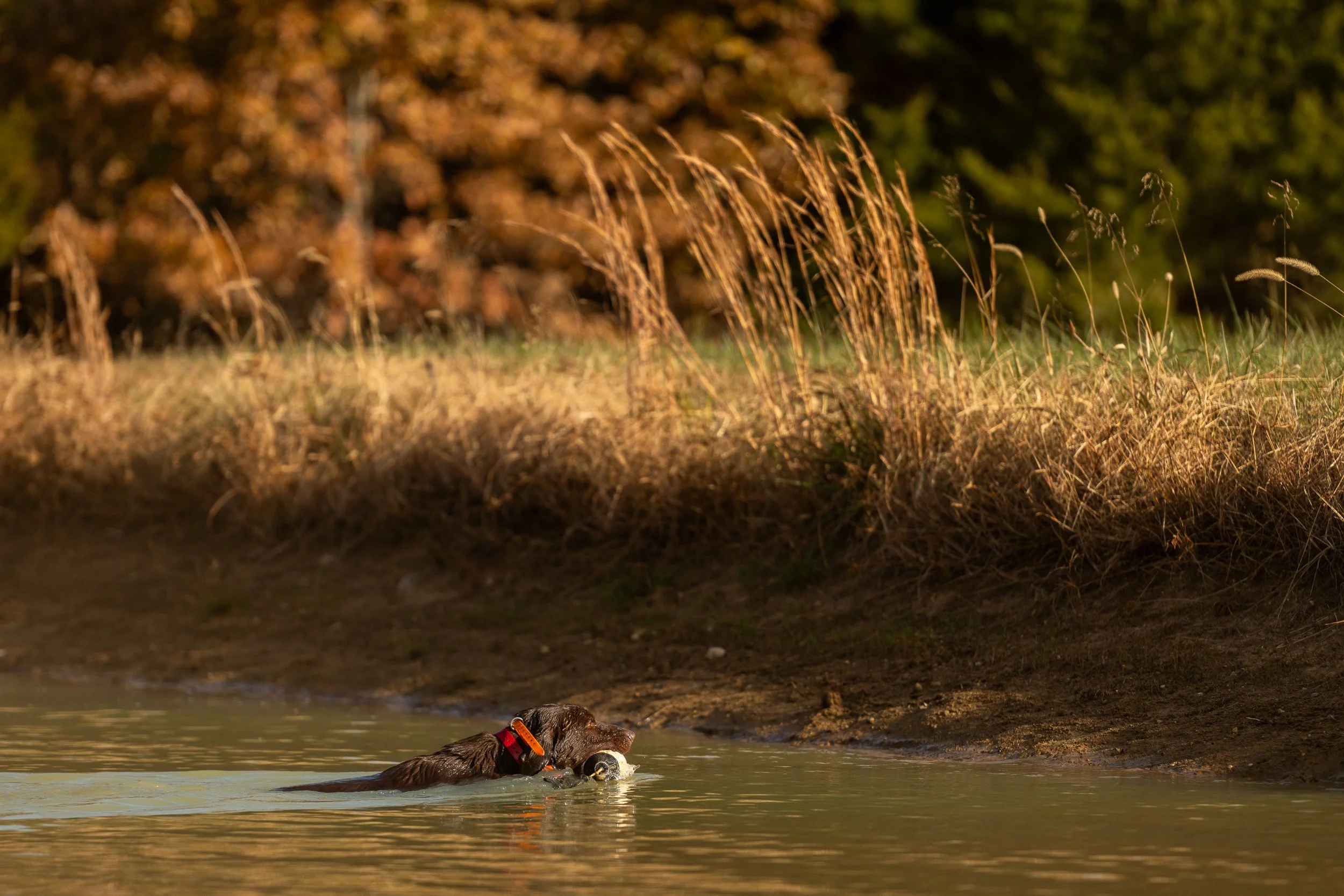
Habitat Flats is built around retrievers, but they run upland hunts in the fall, and that changes what some of the dogs are asked to do. They teach their Labs to flush birds and sit for the shot on hunt tests, a different job than bringing one back across a pond. They also keep one pointer, a dog named Chip. Later that morning I watched Chip work a field edge and freeze onto point, one paw lifted, holding completely still as the handler eased in behind him.
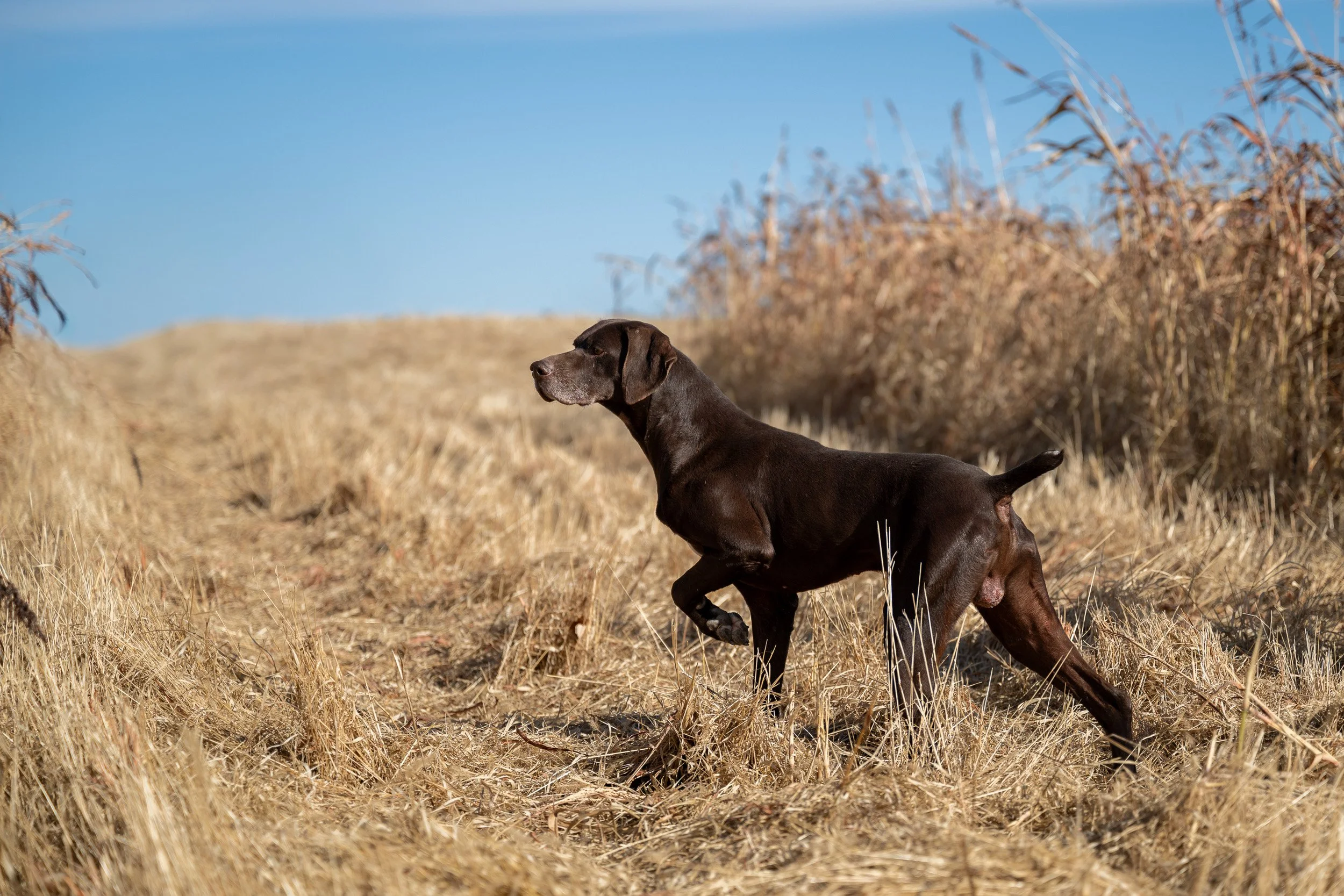
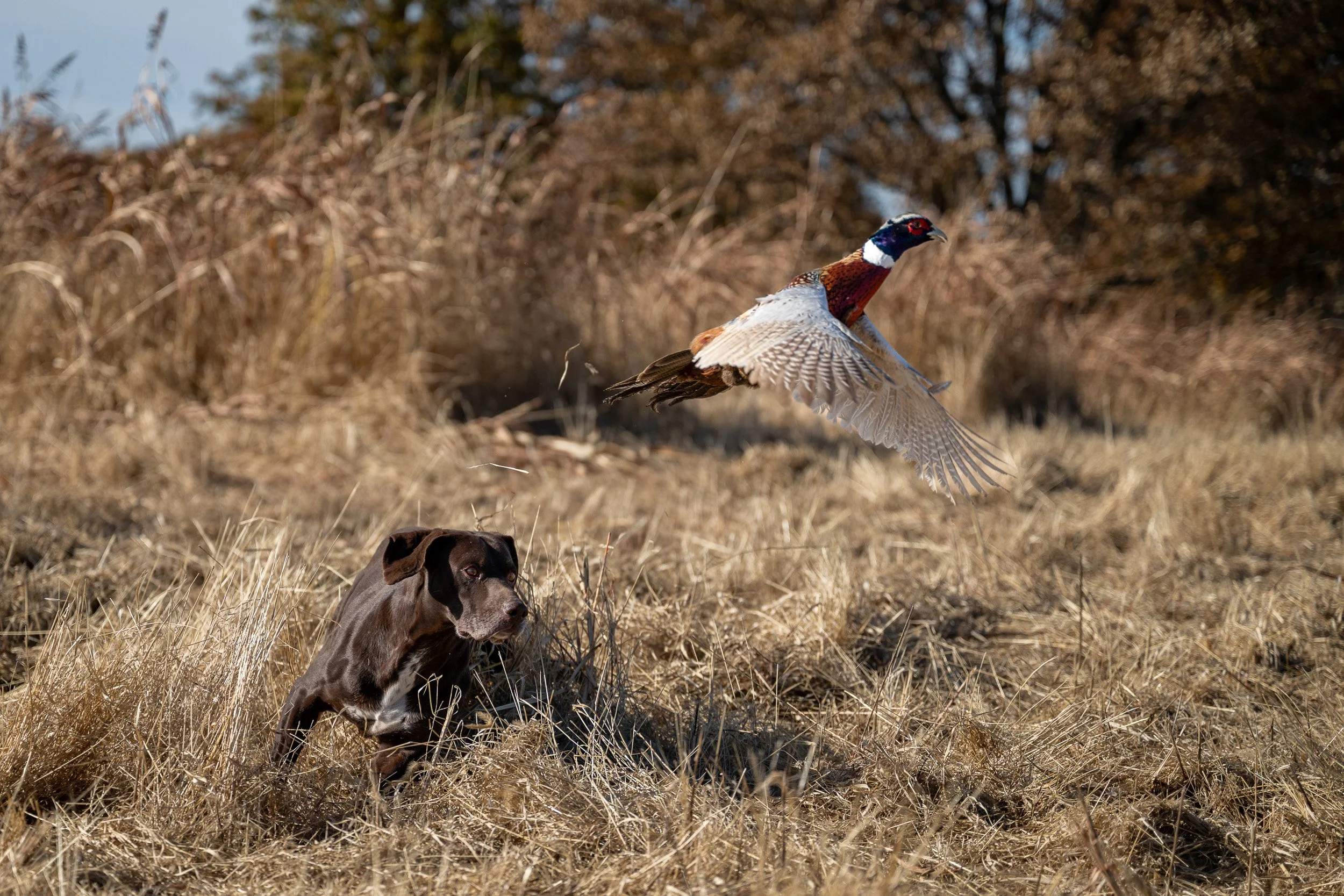
The discipline looked nothing like the water work. Underneath it, though, was the same thing I saw all day. A dog and a person reading each other, and a long stretch of quiet training standing behind a single held moment.
What surprised me most was how much communication happened without words. Tone mattered. Timing mattered. Body position mattered. Sometimes a command was enough. Other times it was a quiet correction or a simple change in posture. I found myself watching the trainers as much as I watched the dogs because it became obvious that one made very little sense without the other.
That realization shifted how I approached the photography.
Early in the morning I reacted to whatever happened in front of me. The good light came early, and it didn't last. By the time we were deep into the drills, the sun was straight overhead and the shade had gone flat, and it was just me and one camera, no lights or modifiers, working with whatever the day gave me. By late morning I had started recognizing the rhythm of each drill. I knew when to stay wide and let the landscape become part of the frame. I knew when to move in close and focus on the relationship between a trainer and a dog. More importantly, I stopped feeling like I needed to photograph every retrieve. Some of my favorite frames came in the seconds before a dog ever left its trainer's side.
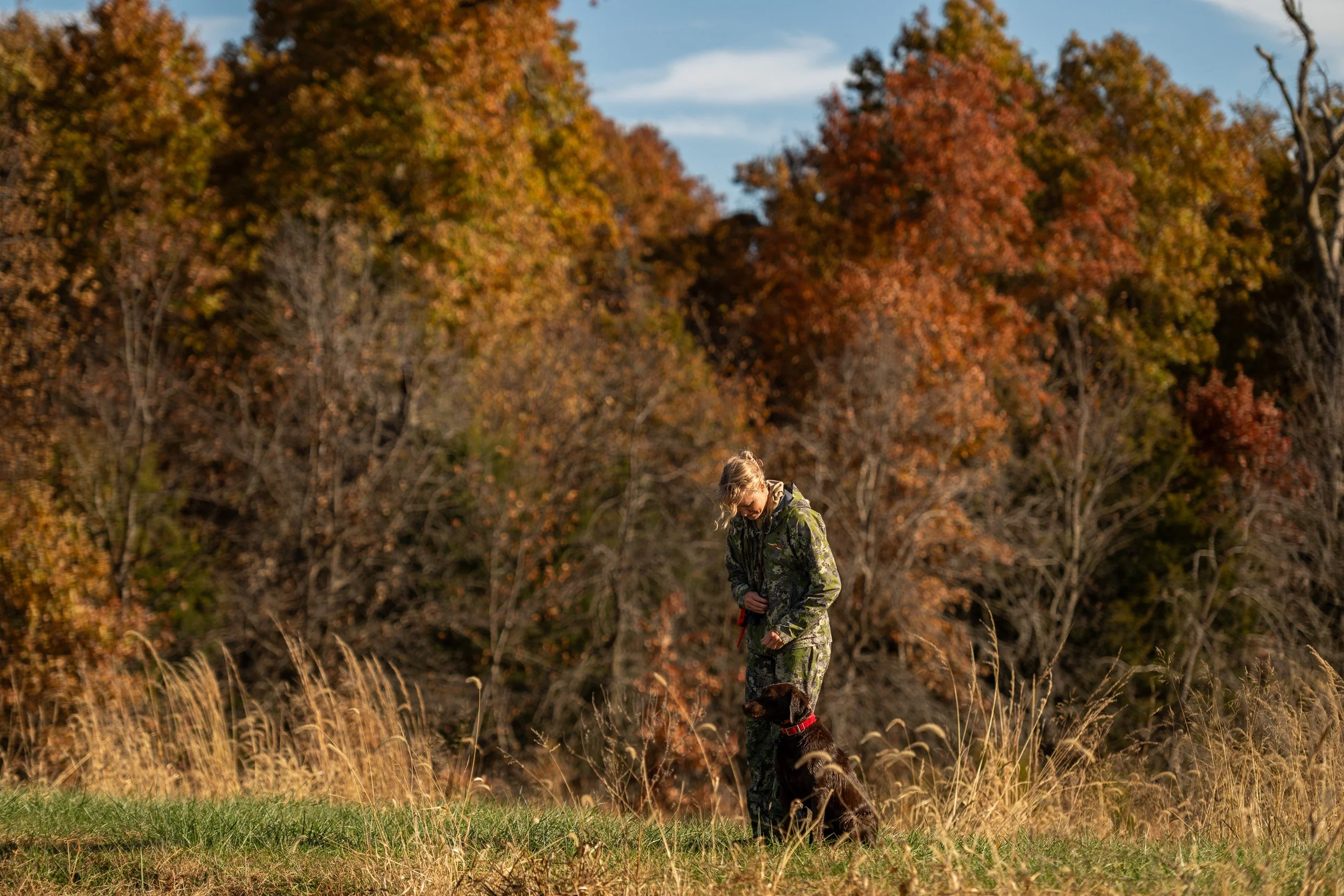
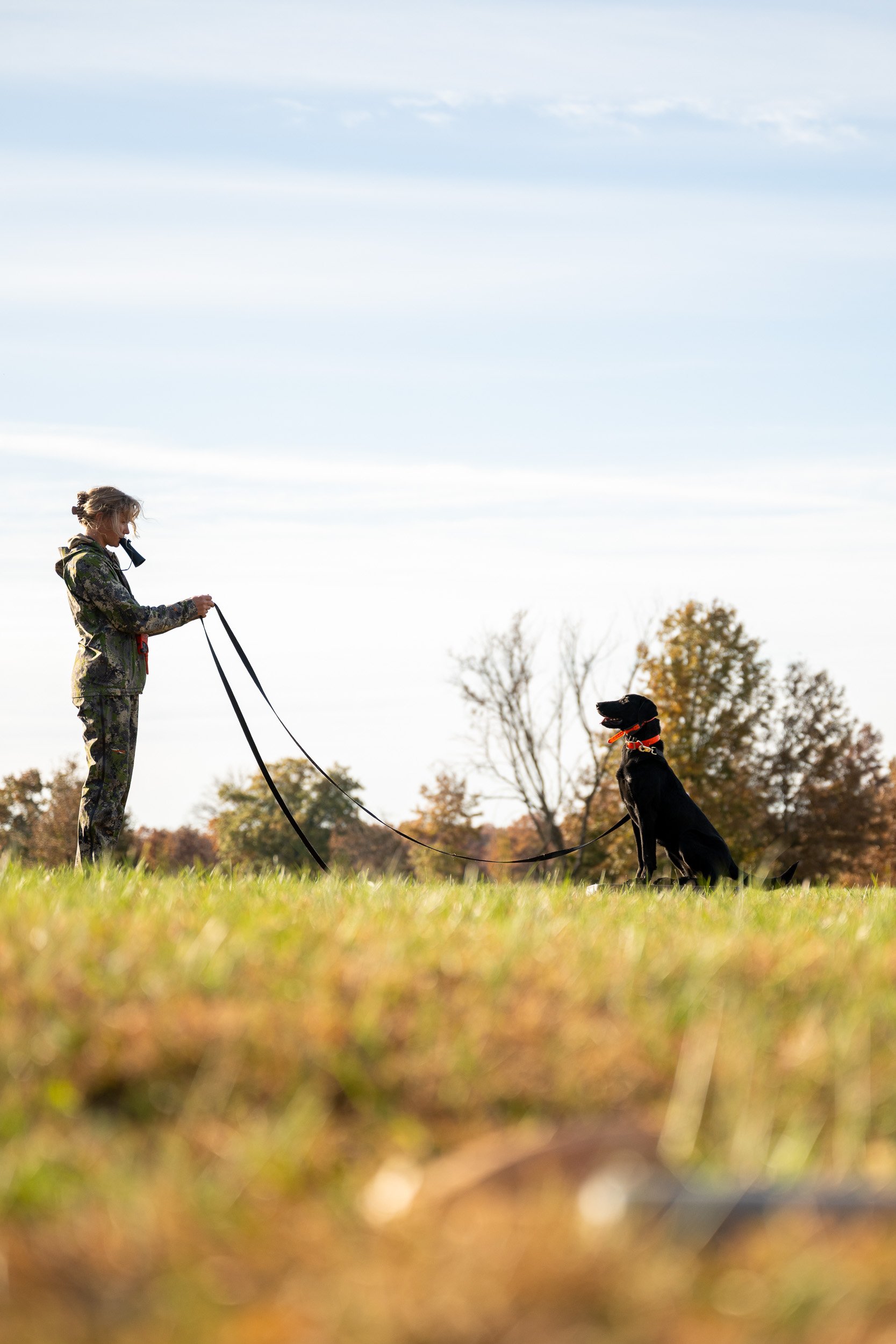
There is one photograph I kept coming back to while editing. Tara is standing at the edge of a pond with a retriever sitting quietly at heel. The dog is completely still, but you can feel the anticipation. Every ounce of energy is pointed toward the retrieve that hasn't happened yet. A few seconds later, the dog launches into the water, makes a beautiful retrieve, and races back to shore. I like those photographs, too, but they aren't the ones I remember first. The quiet moment before the command says just as much about the training as everything that follows.
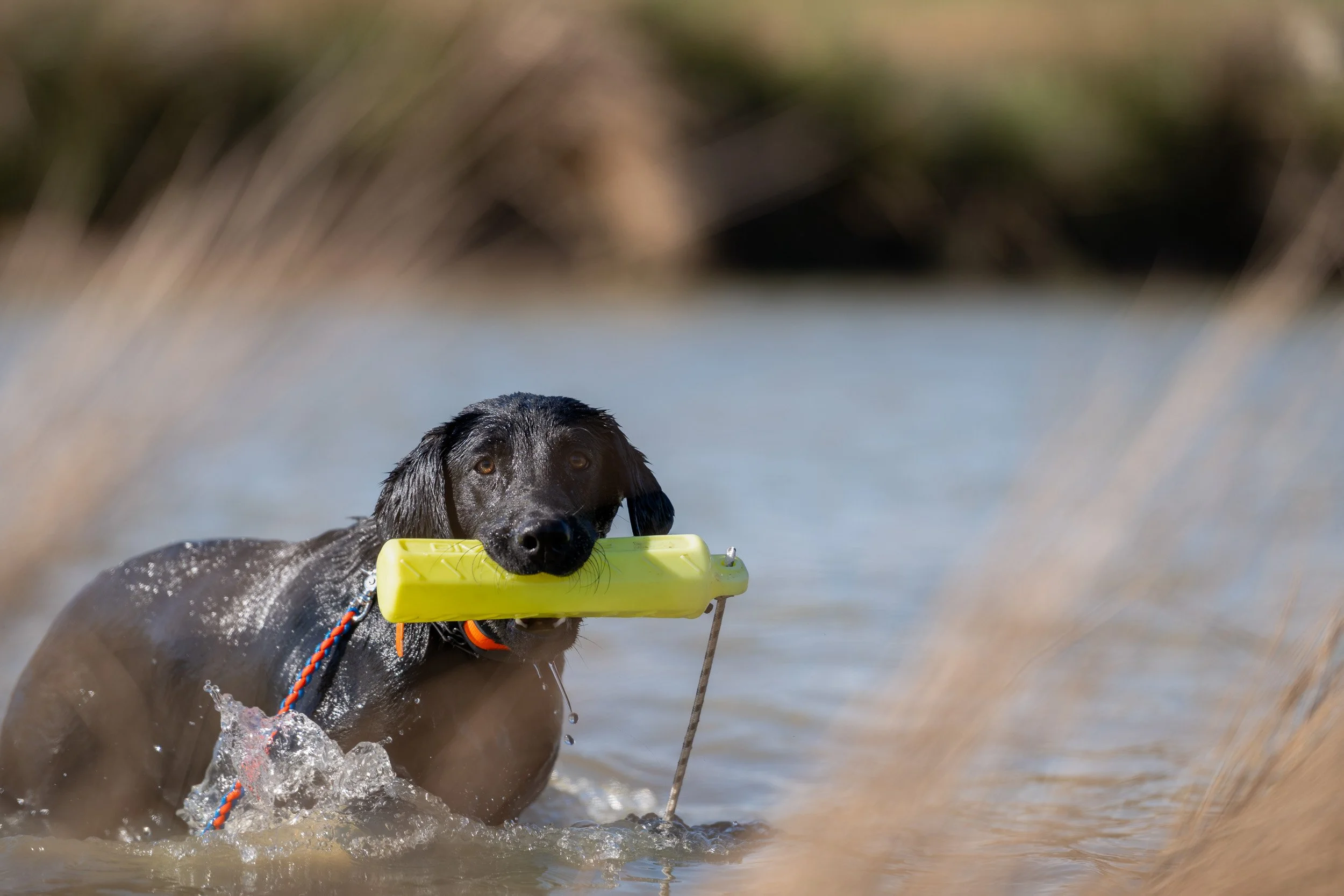
Before spending the day at Habitat Flats, I had never been around professional retriever training. I knew enough to appreciate that the dogs were talented, but I hadn't spent much time thinking about the people responsible for getting them there.
Watching the trainers changed that.
The first thing I noticed was that every dog was treated a little differently. Puppies were introduced to new ideas through play and encouragement. Older dogs were expected to know more, and the expectations rose with them. The drills became more demanding, but so did the communication between trainer and dog. The trainers adjusted their tone, their timing, and even their body language depending on the dog standing in front of them. It wasn't something I picked up all at once. It became more obvious the longer I watched.
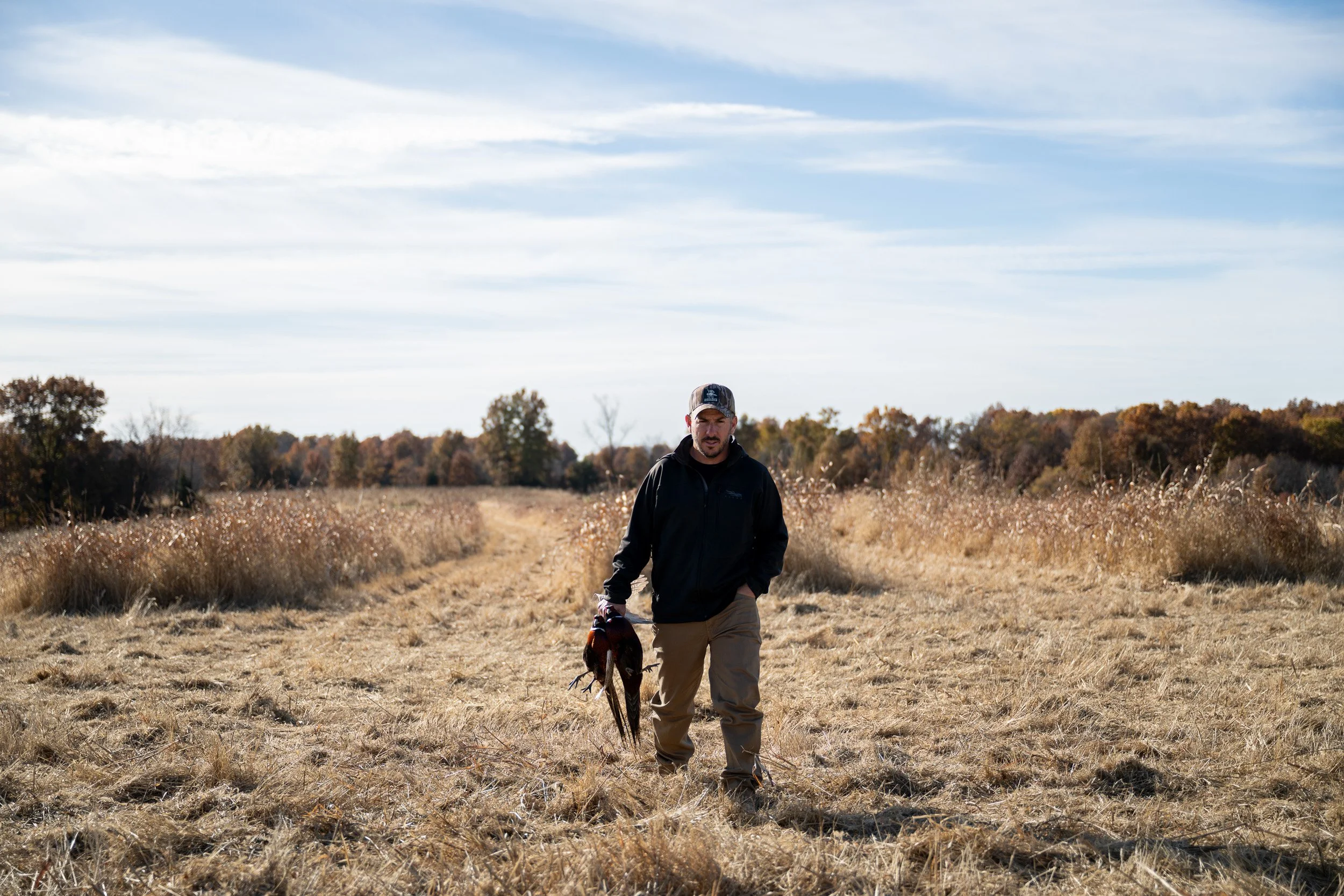
At one point, Eric Teson, who oversees the kennel, shared something that stayed with me for the rest of the day. He told me that when he's hiring trainers, he looks for people with the heart of an elementary school teacher. I kept thinking about that as I watched the different training sessions unfold. It explained a lot of what I had been seeing. There was plenty of structure and plenty of discipline, but there was also an understanding that every dog was learning at a different pace. The trainers weren't trying to force every dog through the same experience. They were paying attention, making adjustments, and asking each dog for what it was ready to give.
That idea shaped how I read the photographs later.
Packing my gear up to head home, I was dusty, a little windburned, and looking forward to a shower. I laughed when I got back to my car and realized just how dirty I was. There was dust on my boots, dirt on my jeans, and enough of it on my camera bag that it needed a little extra attention before my next shoot.
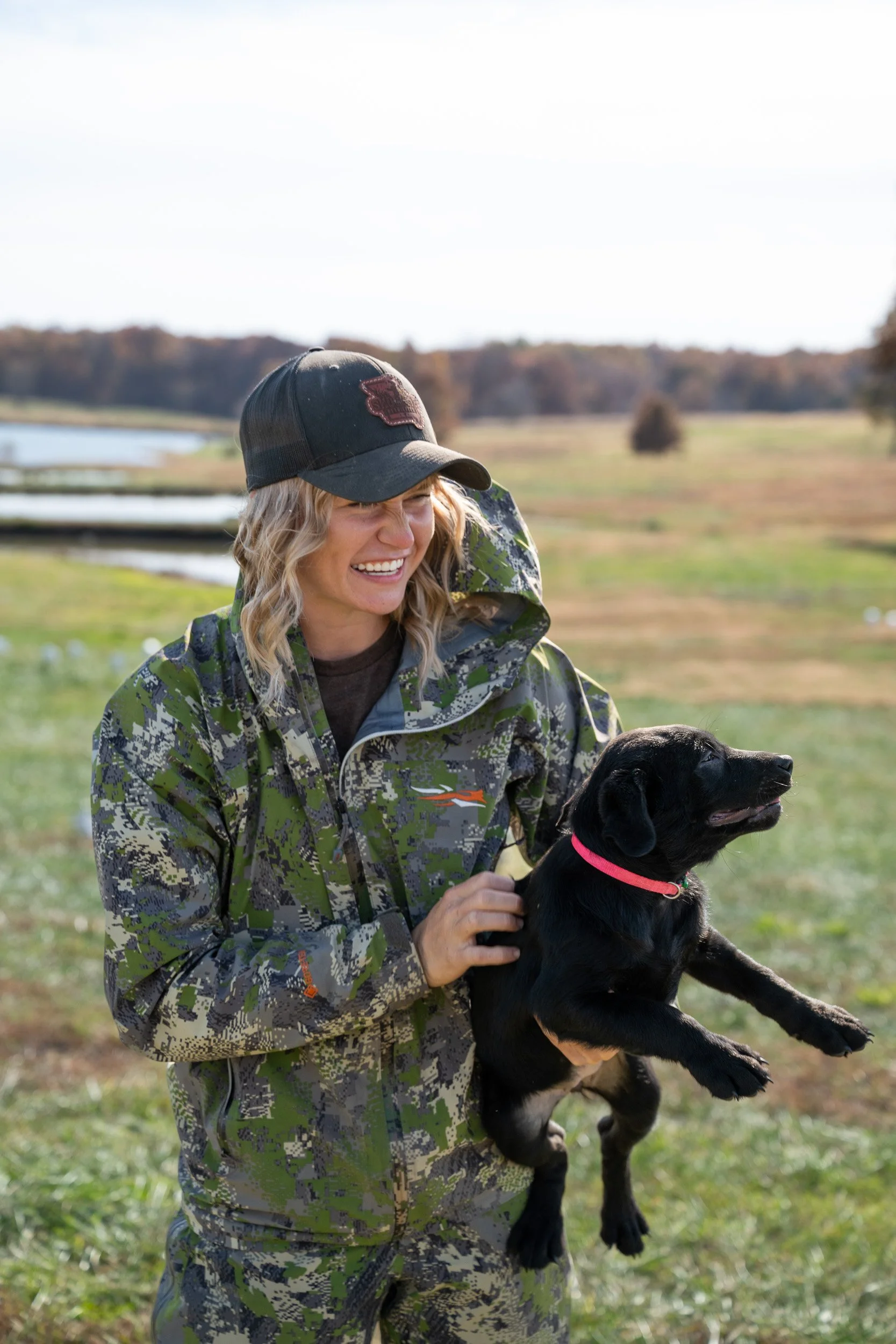
Later that evening, I started working through the photographs in Lightroom. Going into the day, I would have guessed that my favorite images would be the retrieves. They're exciting to watch, and they're exciting to photograph. As I edited, though, I found myself stopping on different frames. A dog sitting patiently beside its trainer. Someone kneeling beside a puppy. A quiet moment before the next drill began. Those photographs held my attention because they helped explain everything else I'd seen that day.
Part of why I enjoy photography as much as I do is that it gives me an excuse to spend time in places I probably wouldn't experience otherwise. Sometimes that means traveling halfway around the world. Sometimes it means driving a couple of hours north on an October morning. Either way, I get to spend a day learning about people, places, and professions that are completely unfamiliar to me.
I arrived at Habitat Flats hoping to spend a day outside making photographs of dogs. I left with that, but I also left with a deeper appreciation for the people behind them.