The Prospect KC
One nonprofit. Two programs. One shared mission.
The Prospect KC's mission comes to life through two cornerstone programs. Community Kitchen serves more than 25,000 meals each month, while Culinary Futures prepares students for careers in the culinary industry through a 16-week workforce development program. The programs share a mission and often share the same kitchen, but each represents a distinct part of The Prospect KC's impact.
When we first started talking, the organization's Director of Media Relations, Mikita Watson, was clear about what she hoped the finished films would do. She wanted it to "showcase the years of work and dedication that have been put into the organization, while pulling out the massive amount of work that still needs to be done." That dual purpose, honoring what had been built while conveying the need that remained, shaped every decision that followed.
Rather than condensing The Prospect KC into a single overview film, I created a dedicated documentary for each program. That approach allowed each documentary to focus on what made the program unique while still reflecting the shared values that define The Prospect KC.
Taking shape
Creative projects rarely begin with complete clarity. They begin with a conversation, a list of ideas, and a working understanding of the problem. The Prospect KC was no different.
Our earliest discussions focused on creating a broad library of visual assets. The initial proposal included still photography, an overview video, and supporting content that could be used across the organization's website and marketing materials. It was a practical starting point, designed to document a wide range of programs and locations.
Over the following weeks, however, those conversations became increasingly focused. Community Kitchen and Culinary Futures kept coming into focus. Each carried a distinct expression of The Prospect KC's mission, with different audiences, different goals, and different stories to tell. As that understanding developed, the project evolved alongside it. First, the emphasis shifted toward those two programs. Then the supporting photography and overview concepts were set aside entirely, leaving two documentary films that could explore each program on its own terms.
That evolution was something the organization valued as much as I did. As Mikita put it, "Anytime more than one cook is in the kitchen, it can evolve to what everyone's vision is versus what I specifically had in mind. I was grateful we could redefine and work toward the new vision."
Looking back, the project became more precise with each pass. Every conversation removed another layer until it was no longer trying to explain The Prospect KC as a whole, and focused instead on two programs whose stories were strong enough to stand on their own.
Building trust
Before production began, I spent time at The Prospect KC, learning the place before bringing a camera into it. The visit was a chance to walk through the kitchen, see how each program used the building, note the available light, and begin imagining how the rooms might translate on screen.
More importantly, it was a chance to meet the people behind the programs. I met Chef Shanita and members of the staff, learned how the organization operated throughout the day, and began building relationships before production officially started. Those early conversations created a level of familiarity that would have been difficult to establish while trying to film at the same time.
That outside perspective turned out to be useful for the organization, too. Reflecting on the visits, Mikita noted, "It was great to have a fresh set of eyes to see the organization from a community member's perspective. It helped me see a broad scope, without the limitations I sometimes have seeing it as a worker."
By the time production began, the building no longer felt unfamiliar. I wasn't spending the first hour learning where people worked, how the kitchen functioned, or how to find my way around. That familiarity let me focus on observation, anticipating what would happen next instead of reacting to it.
Working with care
Community Kitchen serves people at their most vulnerable. That reality shaped production from the beginning. Every filming decision balanced the need to honestly represent the organization against the responsibility to respect the privacy and dignity of the people it serves.
The guests are part of this story, and the films include them. Their circumstances are real, and the films never look away from that. But their hardship is never there to move an audience. It appears because it is true. The camera stays with the activity around them: the volunteers, staff, Culinary Futures students, and the daily rhythm of the kitchen that carries the organization's impact. The goal was to show the systems, relationships, and people that keep it running.
For an organization whose guests' comfort comes first, that approach counted. Asked how the filming felt from the inside, Mikita put it plainly: "You were great, always with respect, and knowing the limitations of our guests."
Observation first
By the time filming began, the direction of each documentary was clear. The question was how to tell it.
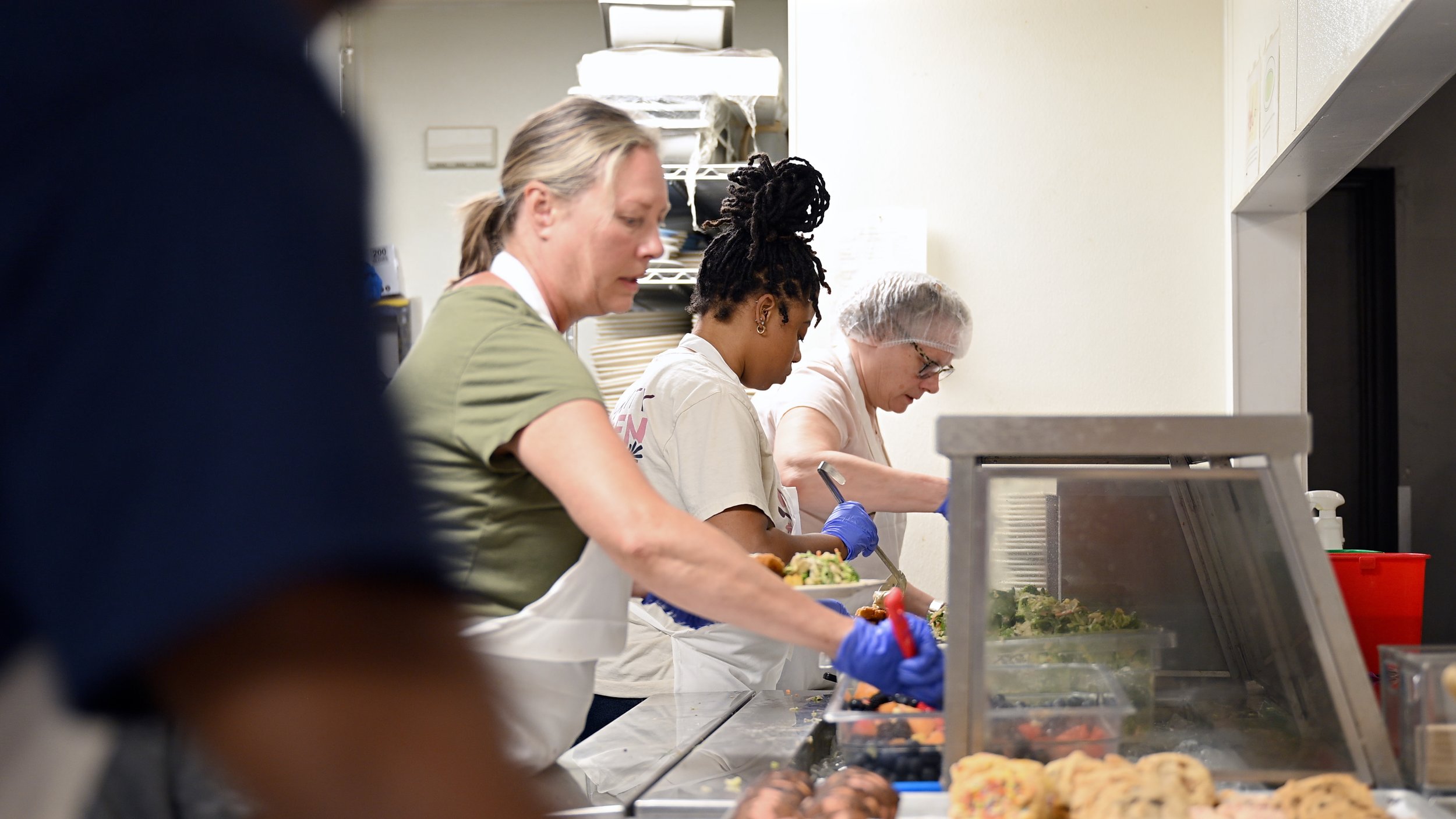
Inside the Community Kitchen, observation dictated every decision. Some scenes called for locked-off compositions that allowed the pace of the kitchen to unfold naturally. Others required moving alongside the staff with a handheld camera, following cooks between workstations or closing in on details that often go unnoticed. Knife skills. Steam rising from a stock pot. Sizzling caramel. Flames beneath a burner. Hundreds of repetitive movements became part of the visual language of the documentary.
Nothing was staged. Nothing was repeated. Every meal being prepared would be served later that day, so the cooking always came first. My responsibility was to move through the kitchen without interrupting the people responsible for feeding hundreds of guests.
The interview days required a different mindset. Chef Shanita's interview took place early in the morning before the kitchen came to life, when the room was quiet enough to record clean audio before the ventilation system and daily activity filled the space. The Culinary Futures graduates were interviewed upstairs in a quieter, more comfortable environment while also giving greater control over sound and composition. In both settings, I relied primarily on available light rather than introducing large lighting setups. That approach preserved the atmosphere of each room and let the conversations unfold naturally.
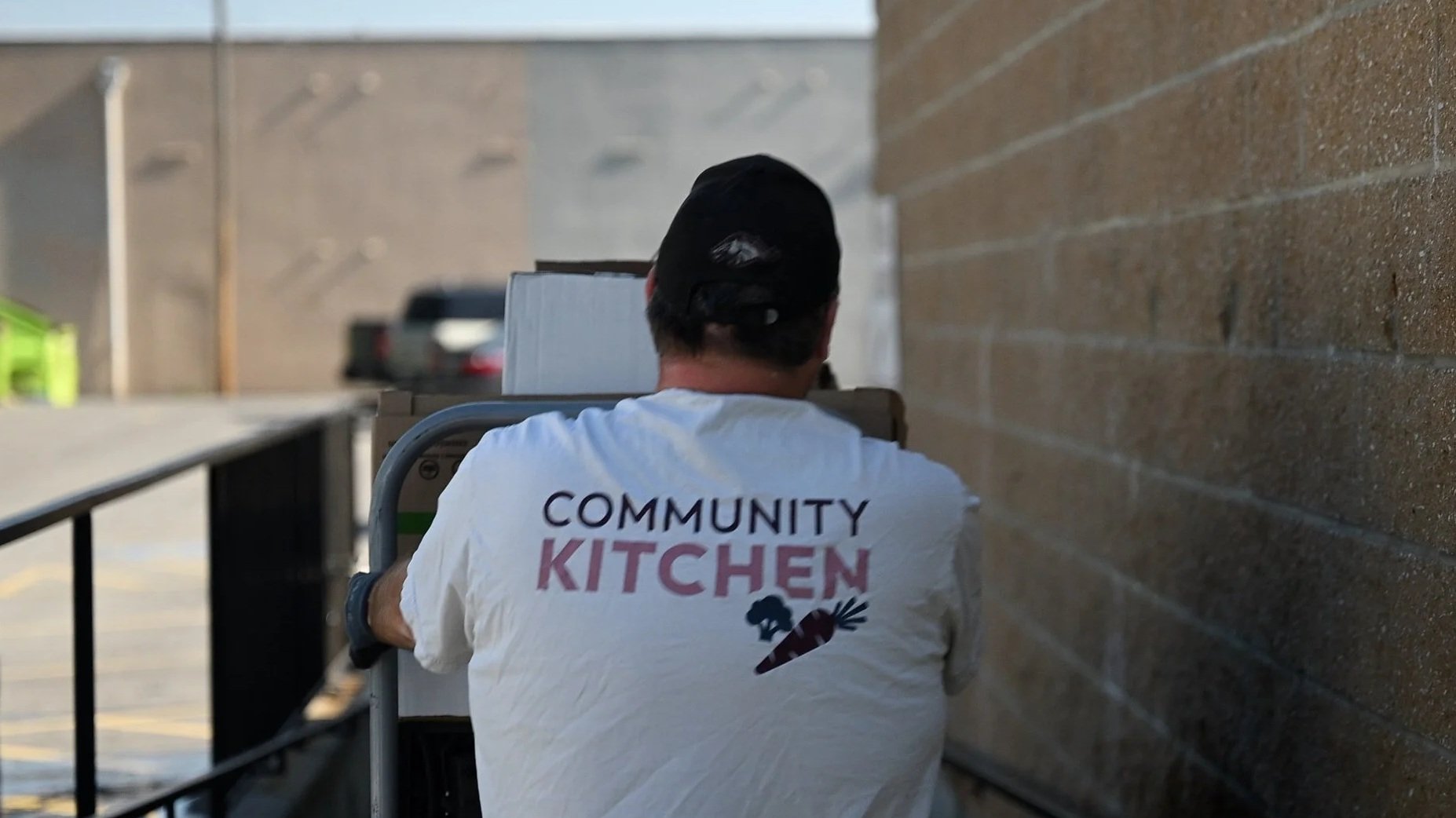
Not every story began in the kitchen. One shooting day followed Culinary Futures students to a community garden, where they learned about growing vegetables and harvested produce that would later return to the Community Kitchen to be prepared and served. Another began before sunrise, shadowing the staff member responsible for food recovery as he collected donated food from local grocery stores before bringing it back to The Prospect KC. Those sequences expanded the documentaries beyond the kitchen itself, revealing that every meal begins with a network of people and partnerships long before it reaches someone's plate.
Every shooting day looked different. Some required a tripod and patient observation. Others demanded constant movement, quick decisions, and an awareness of details that disappeared as quickly as they appeared. Interviews required careful attention to sound and light, while the kitchen rewarded anticipation and restraint. The approach changed from one setting to the next because each demanded something different. The camera followed the kitchen instead of asking the kitchen to accommodate it.
Finding the cut
As filming came to a close, the project entered an entirely different phase. New ideas emerged through conversations, unexpected moments, and opportunities that only became visible once filming was underway. Following the food recovery route, for example, was never part of the original plan. It became central to understanding how Community Kitchen operates. By the time filming wrapped, the story was clearer than it had been at the beginning, but it still hadn't been assembled.
The editing process became an exercise in discipline. Interviews formed the narrative spine of each documentary, while footage gathered across multiple shooting days provided the visual language that carried those ideas forward. Every sequence had to earn its place. Strong shots alone weren't enough. A scene had to strengthen the story to stay, no matter how good it looked. Every decision required balancing pacing, emotion, information, and rhythm until each film felt cohesive.
The structure of the project introduced another challenge. Both documentaries were built from the same footage. Chef Shanita's interview informed each film. The kitchen appeared throughout both stories. Many of the same shooting days fed both edits. The goal was to understand what belonged in each documentary. The same interview might serve one purpose in the Community Kitchen film and a different one in Culinary Futures. Editing became a matter of finding where each shot belonged.
When the edits were complete, each film carried its own perspective on the same organization, drawn from shared footage but aimed at a different story. Together they said more than either film could have on its own.
Finished films
The completed project included two documentary films, each created to communicate a distinct part of The Prospect KC's mission while complementing one another as part of a broader story.
Culinary Futures explores the organization's workforce development program through the experiences of graduates, instructors, and staff, illustrating how culinary training creates pathways to long-term employment.
Community Kitchen follows recovered food from local grocery partners through preparation and into the dining room, highlighting the people, partnerships, and daily coordination required to serve hundreds of meals with dignity.
As production came to a close, one story still had no home. The footage from the Culinary Futures visit to the community garden showed an important part of the program's education, but it didn't fit the structure of either documentary. Instead of leaving it unused, I built a third short film around the garden visit and delivered it alongside the two primary documentaries.
In the end, the project consisted of three films. Two were planned from the outset. The third came out of the process itself.
What the films made possible
When Mikita watched the finished films for the first time, what mattered most was that they rang true. "It was a beautiful capture of the spirit of what we do and why we do it," she said.
The films also created something the organization rarely gets: a chance to hear its own people reflect. "Seeing our graduates and how they view what they're doing now, after going through training, was great to hear," Mikita said. "It's usually 'here's your work, thank you.' I rarely have a chance to talk to them about the work."
Since delivery, the organization has put the films to use across its audiences. The Prospect KC shares them with board members and the general public through YouTube and social channels, and uses them as proof of concept for grant writing, supporting the funding that keeps both programs running.
The lasting story
Every organization has a story to tell. The harder part is understanding it well enough to communicate it with honesty and clarity.
For The Prospect KC, that meant moving beyond a collection of interviews and supporting footage to create films rooted in observation, relationships, and the people behind the mission. The result was a set of films the organization can use to recruit students, engage donors, explain its mission, and show the people behind it. Films built to help The Prospect KC communicate who they are and why it matters.
For me, this project reinforced something I continue to find true of documentary filmmaking. The strongest stories are rarely fully understood before production begins. They emerge through curiosity, patient observation, and the discipline to shape what you find into something honest.